

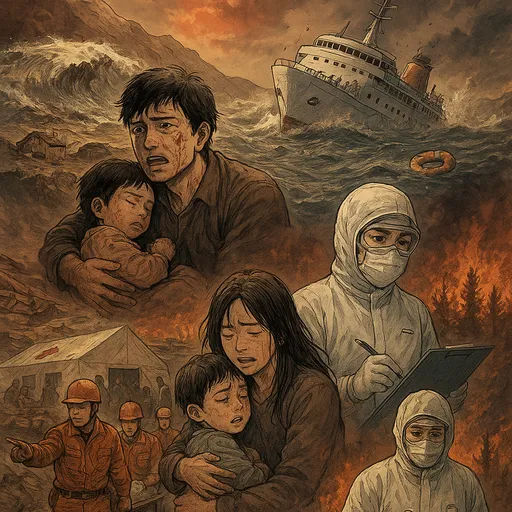
A surge of major disasters — most prominently catastrophic floods and landslides along the Nepal–China border — has produced staggering death tolls, thousands missing and sustained international rescue and relief operations. Maritime tragedies in the Mediterranean and Atlantic, including ferry capsizes and migrant boat sinkings, underscore continuing search-and-rescue challenges and migration risks. Concurrent public‑health emergencies such as the Ebola outbreak in the Democratic Republic of the Congo, seasonal wildfires in Southeast Asia, and isolated mass‑casualty incidents are stretching humanitarian and medical responses. Governments and donors have mounted drills, donations and disaster declarations while funding shortfalls and logistical bottlenecks complicate sustained relief delivery across multiple crises.
International and regional outlets report an escalating humanitarian emergency along the Nepal–China border emphasizing rising death tolls, mass missing-person counts, and urgent search‑and‑rescue efforts. Coverage highlights both official rescue operations and grassroots technical coordination (including WhatsApp engineer networks), plus concerns about logistics, media access and the need for scaled international assistance.
Regional reporting focuses on large-scale search‑and‑rescue operations after passenger and migrant boat disasters, stressing high fatalities, ongoing searches for the missing and the broader safety and migration policy implications. Authorities and rescuers are portrayed racing against time amid investigations into causes and vessel safety conditions.
Health authorities and international observers report a severe, protracted Ebola outbreak in the Democratic Republic of the Congo with thousands of cases and deaths, even as neighboring outbreaks end. The coverage underscores the need for sustained surveillance, vaccination and international support to control transmission.
Small and mid‑sized states and territories emphasize rapid humanitarian solidarity, reporting financial contributions and emergency aid pledged to Colombia following a major earthquake. Coverage frames these donations as part of broader international relief efforts to support survivors and displaced people.
Governments and agencies highlight readiness through chemical/biological drills, civil‑defense exercises and hazardous‑materials responses to demonstrate capacity and coordination. Reporting covers both routine preparedness (school drills, national exercises) and acute incidents (airport hazmat evacuations, federal disaster declarations) as tests of resilience.
Regional media emphasize the public‑health, ecological and cross‑border impacts of Indonesian wildfires and haze, including wildlife rescues and deteriorating air quality. Coverage links environmental degradation and firefighting response to wider regional health and climate vulnerabilities.
Domestic reporting highlights an acute mass‑poisoning incident affecting thousands of students and teachers, focusing on emergency medical response and an official investigation into the cause. The piece stresses the scale of casualties and the need for public‑health action.
Regional organizations and external observers frame Haiti as facing an acute security crisis that requires accelerated international support, while UN‑backed stabilization efforts face staffing and capability shortfalls. Coverage centers on the need to bolster security to enable humanitarian access and stability.
Reports from donor and humanitarian perspectives warn that funding gaps and sustained refugee inflows are straining aid delivery and food assistance, threatening vulnerable populations and host communities. The cluster also notes the role of veteran humanitarian personnel and organizations in sustained relief work.
Coverage highlights the operational impacts of extreme weather and disasters on critical infrastructure — from desalination plants and airports to urban power grids — and the ongoing restoration efforts. Reports emphasize implications for water, transport and energy security and the need for rapid repairs and contingency planning.
A collection of national reports documents episodic tragedies — landfill collapses, landslides, conflict‑related blasts, oil‑depot fires and attacks on health teams — underscoring localized vulnerabilities and the need for improved safety, emergency response and protection of civilians and aid workers.
Meteorological and seismic briefings relay ongoing monitoring and warnings for storms and minor quakes that prompted local preparedness and alerts, reflecting vigilance even when immediate casualties are limited. The reporting frames these events as part of seasonal and regional risk monitoring.