
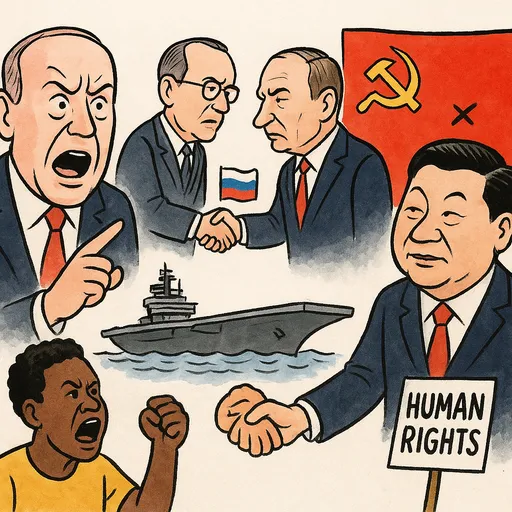
Recent international coverage shows US foreign policy in flux, with intensified diplomatic activity around Ukraine alongside warnings of broader Russian aggression and renewed envoy visits to Moscow and Kyiv. America’s military posture — from prolonged carrier deployments to debates over experimental units — and provocative rhetoric from former US leaders are generating friction with allies and regional partners. Economic and development tools are being redeployed across the Pacific, Africa and Latin America even as human-rights and detention incidents provoke overseas protests. Meanwhile China and Russia are portrayed as deepening ties where allied cohesion weakens, creating openings that complicate Washington’s strategic objectives.
European and allied sources emphasize active US engagement in Ukraine diplomacy while warning about broader Russian ambitions and the need for allied burden-sharing. Coverage highlights envoy visits to Kyiv and Moscow, NATO readiness, and contentious debates about who should fund continued Western assistance.
Regional and international outlets focus on the wear-and-tear of prolonged US naval deployments and the implications for readiness and personnel morale. Reporting centers on the USS Abraham Lincoln’s long deployment, its port calls in Thailand, and local restrictions affecting sailors ashore.
Latin American coverage frames recent US comments as energizing Argentine claims over the Falklands/Malvinas and stoking regional diplomatic confrontation with the UK. Argentine domestic politics and presidential rhetoric are described as escalating the dispute while provoking mixed reactions at home and abroad.
Pacific media report both increased US investment and assistance pledges and sensitive incidents that strain bilateral ties, reflecting a competition for influence in the region. Washington’s financial package and development outreach are paired with scrutiny following an ICE-custody death and diplomatic pushback from regional actors.
Analyses from across Eurasia warn that cracks in US-allied coordination create openings for China and complicate collective responses to security challenges. Observers point to deepening Chinese ties and allied concern about reliance on US defense capabilities as signs of shifting strategic balances.
Regional commentary emphasizes Washington’s active pressure on authoritarian regimes in Latin America and highlights the geopolitical stakes around Venezuela’s contested elections. US calls to isolate Nicaragua’s Ortega–Murillo government and criticism of Venezuela’s electoral readiness are portrayed as part of broader democratic and sanctions strategies.
Cuban outlets and allied coverage reject US accusations and highlight Russian diplomatic solidarity as Havana confronts renewed US scrutiny. The narrative frames US reporting as ideological and emphasizes external support for Cuba’s sovereignty claims.
Regional reporting stresses the extent to which Israeli proposals for Gaza’s future hinge on US approval, and US domestic politics shapes measures affecting Israel, including congressional actions on campus boycotts. The pieces reflect concern about humanitarian, legal and political consequences of US-Israel coordination.
Multiple international outlets react to provocative US remarks about renaming the Strait of Hormuz, viewing them as diplomatic grandstanding that could inflame regional sensitivities. Coverage treats the comments as symbolic of larger tensions over Gulf security and US rhetoric.
Reports from a range of countries highlight how US personnel moves, public accusations by diplomats, and high-profile appointments resonate abroad and can strain bilateral relations. Coverage links domestic resignations, envoy controversies and White House personnel choices to a more transactional and personalized US diplomacy.
Global reporting notes Washington’s attempts to influence private-sector participation in international forums and the mixed reception to US-driven funding offers. Discussions range from White House pressure over space-summit participation to debates about aid funding and trade preferences.
Coverage highlights US efforts to promote tourism and extend trade preferences while grappling with partner concerns about funding sources and program independence. The reporting sees these economic levers as central to Washington’s soft-power toolkit and regional engagement strategies.
Regional analysts report concern that US policy and rhetoric could escalate tensions with Iran and reshape alignments in the broader Middle East, including new narratives about Syria as a trade or energy corridor. Coverage links presidential statements, adviser positions and diplomatic gestures to risks of intensified confrontation.
Observers note a shift away from cooperation with the Taliban despite outreach offers, framing the US decision as shaped by security and human-rights concerns. The pieces analyze enduring dilemmas in Washington’s approach to Afghanistan and the limits of military solutions.
Coverage from Asia warns that fraying US-South Korea ties risk sidelining Seoul in any US–North Korea talks and highlights broader strain in alliance management. Reports also point to coordination challenges between the US and European defense partners in related diplomacy.
Qatari commentary rebuts claims of antisemitism on US campuses and seeks constructive engagement with American institutions, framing the issue as a matter for dialogue rather than confrontation. The piece emphasizes Doha’s interest in preserving bilateral ties with Washington.
Local reporting underscores continued US support for regional security operations such as KFOR in Kosovo and spotlights cooperation with local authorities. The pieces frame US engagement as vital to stability but subject to ongoing optimization debates.