
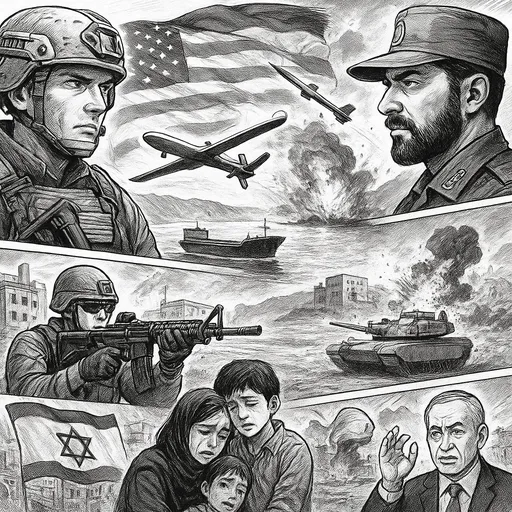
Fighting between the United States and Iran has resumed across the Gulf, with air strikes, missile and drone attacks reported against bases and shipping in the Strait of Hormuz, raising fears of disruption to energy markets and a broader regional war. Simultaneously, intensive Israeli operations in the West Bank, Gaza and along the Lebanon border — including raids, killings and settlement expansions — are driving local humanitarian alarms and international criticism. Separate threads of violence in Yemen, attacks on tankers and footage of drone strikes underline multiple active fronts beyond the Iran–US axis. International actors are reacting with condemnations, calls for restraint and discussions of troop contributions or deployments, while contentious reports of civilian deaths (notably at an Iranian wedding) have intensified scrutiny and demands for investigations.
Sources in this group emphasize the tit‑for‑tat military exchanges between Washington and Tehran, and the direct risks those strikes pose to bases, logistics and commercial shipping in the Strait of Hormuz. Reporting highlights raised oil prices, disrupted naval supply lines, claims and counterclaims about strikes across several Gulf states, and statements from leaders signaling readiness for further action.
These pieces focus on alleged civilian harm from recent strikes, especially disputed reports of a strike on an Iranian wedding, the presentation of forensic images and eyewitness accounts, and international calls for thorough, independent investigations. The reporting foregrounds humanitarian concern and legal questions about proportionality and target verification.
This cluster reflects reporting that highlights killings, raids and settlement expansion in the occupied Palestinian territories, as well as human‑rights and legal critiques of Israeli measures. Coverage stresses civilian impact, house raids and demolitions, proposed evacuations or depopulation plans for Gaza, and calls by rights groups and observers for restraint and accountability.
Reports grouped here stress renewed exchanges along the Israel‑Lebanon frontier — including air strikes, artillery, claims of territorial control and hostage or detainee moves — and frame these actions as risks for wider escalation with Hezbollah and Lebanese authorities. Regional leaders and observers warn that border fighting could widen the conflict and complicate diplomacy.
This perspective centers on Yemeni forces’ continued use of drones and missile systems against Saudi‑led targets and the intensification of fighting in Taiz, portraying Yemen as an active secondary front that sustains pressure on regional adversaries. Coverage emphasizes operational claims by Yemeni war media and the humanitarian toll of renewed ground and aerial clashes.
This group highlights statements from regional capitals, diplomatic condemnations and reports that third countries are weighing or preparing deployments to the Hormuz region, reflecting how the crisis is prompting allied responses and civilian contingency guidance. The coverage underlines calls for restraint, governments’ risk advisories, and public debate about military contributions to protect shipping and deter escalation.
This item reflects a domestic political angle in Israel, where allegations and accusations between political figures underscore how the conflict and its handling are influencing internal political rivalries and public accountability debates. The reporting connects political disputes at home to broader questions about leadership and responsibility for security policy.