

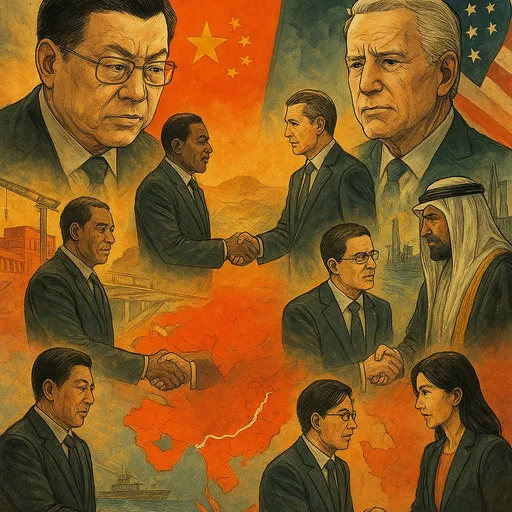
Across regions, states pursued a mix of high-profile strategic outreach, trade pacts and security arrangements that reflect shifting alignments and pragmatic cooperation. China stepped up diplomatic, cultural and infrastructure engagement in Africa, the Middle East and Central Asia while Washington advanced major arms approvals and energy-linked agreements, notably involving Gulf partners and Venezuela. Several African and Pacific states deepened development and investment ties with diverse partners, while Southeast Asian governments pushed trade connectivity and market access. Contested sovereignty and diplomatic repositioning—most visibly over the Falklands and multiple moves or proposals to relocate embassies to Jerusalem—added geopolitical friction to otherwise transactional bilateral deals. Ongoing trade negotiations and new free-trade commitments highlighted economic diplomacy as states balance strategic, security and commercial priorities.
Beijing emphasizes long-term, multifaceted partnerships—combining cultural, economic and infrastructure ties—to expand influence and present China as a development partner. The perspective stresses mutual development projects, cultural exchanges and pragmatic support to partner states across Africa, the Middle East and Central Asia.
Washington continues to project security ties through defense sales and bilateral cooperation aimed at bolstering partners’ capabilities and regional deterrence. The U.S. approach couples formal arms approvals with defense dialogues and cooperation frameworks to sustain alliances and security relationships.
Recent energy accords involving the United States and Venezuela signal a transactional rapprochement with implications for markets and domestic politics in both countries. The viewpoint highlights optimism about energy cooperation but also notes skepticism and debate over long-term strategic consequences.
Regional actors prioritize de-escalation and enhanced security coordination while confronting persistent disputes and cross-border operations. Governments emphasize information-sharing, anti-narcotics cooperation and diplomatic appeals to lower tensions to protect trade and energy flows.
Several states are debating or moving diplomatic missions toward Jerusalem, reflecting shifting foreign-policy stances and signaling closer ties with Israel; the trend is contentious and divides regional and continental groupings. These initiatives are framed domestically as strategic realignments but risk broader diplomatic fallout.
Claims over the Falkland/Malvinas islands have resurfaced, with Argentine leadership renewing sovereignty rhetoric and the UK reaffirming control—reviving a long-running diplomatic standoff. Both sides mobilize political language and international attention, underscoring how territorial disputes continue to shape bilateral relations.
Southeast Asian states and partners focus on trade facilitation, new air links and corridor development to diversify routes and deepen regional integration. The viewpoint highlights pragmatic economic cooperation with external gateways and bilateral trade negotiations to boost export sectors and connectivity.
African states deepen ties with European, Asian and regional partners through development programs, investment pledges and high-level visits aimed at accelerating projects and exchanging technical support. The perspective underlines diversification of partners and the practical pursuit of infrastructure, governance and trade outcomes.
Leaders across Central Asia and neighboring Eurasian states pursue high-level visits, energy and infrastructure cooperation, and security dialogue—often involving Russia, China and regional partners. The approach underscores continuity of post‑Soviet links, expanding economic projects and pragmatic summit diplomacy.
Lisbon is deploying targeted credit lines and high-level visits to catalyze Portuguese investment in Cabo Verde, framing the initiative as a mutually beneficial economic partnership. The stance emphasizes financial facilitation and state-level support to boost bilateral projects.
Panama and Ecuador are explicitly aligning on trade, security and energy linkages to combat organized crime and enhance regional interconnection. Leaders present these alliances as pragmatic steps to deepen economic ties and improve cross-border cooperation.
Negotiators across regions are pursuing FTAs and tariff reductions while confronting difficult sticking points, reflecting the centrality of trade diplomacy to national growth strategies. The perspective balances optimism for expanded market access against procedural and political obstacles in talks.
European states are strengthening bilateral ties on defence, technology and Arctic cooperation—combining strategic funding, industrial projects and diplomatic visits to secure shared interests. The narrative highlights collaborative preparedness, research partnerships and cross‑border infrastructure initiatives.
Pacific states engage with regional powers through development programs, training, infrastructure support and security pacts; external actors compete to deliver aid and influence. The viewpoint stresses capacity building, bilateral aid projects and strategic partnerships that shape island states’ choices.
Across Latin America and the Caribbean, governments are recalibrating ties—breaking or restoring relations, engaging in sports and cultural diplomacy, and debating energy deals—reflecting a mix of ideological and pragmatic considerations. The perspective notes both domestic contestation and international outreach as states reposition diplomatically.
The constituent parts of the Kingdom are negotiating urgent police and justice cooperation while contesting the legal frameworks that would bind them. The viewpoint reveals consensus on operational needs but divergence over sovereignty, privacy and legal harmonization.
Sector-specific bilateral controversies and governance issues—from sports federation governance to one-off policy disputes—signal the breadth of state-to-state interactions beyond classical diplomacy. These items capture niche but consequential bilateral frictions and administrative decisions.