
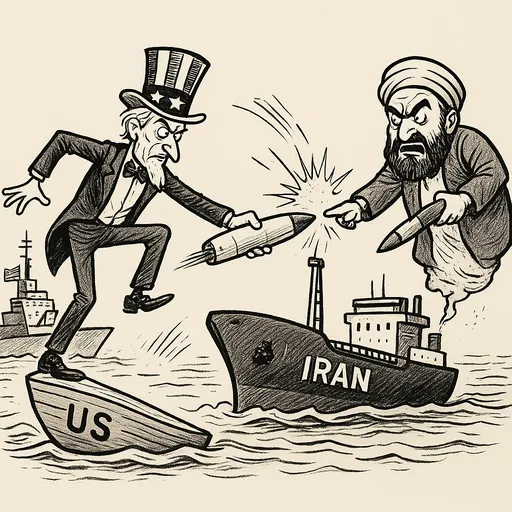
A wave of maritime exchanges between the United States and Iran has rapidly escalated: U.S. forces say they destroyed multiple Iranian-flagged oil tankers in retaliation for missile and projectile attacks on American ships, while Iran and the IRGC claim they struck U.S.-linked vessels and fired missiles at warships. Reports describe video and imagery released by CENTCOM and extensive Iranian statements warning of heavier reprisals if attacks continue, underscoring intense military signaling on both sides. The confrontation has raised acute risks to shipping in the Strait of Hormuz and Gulf of Oman, with commentators and international actors warning of disruptions to global energy markets. At the same time, separate but related frontlines — Israel’s operations in Lebanon, Syria and the West Bank, Gaza casualties, and fighting in Yemen — risk regional spillover, prompting calls for de-escalation and analysis that the conflict could be prolonged.
Western and U.S.-aligned outlets frame the U.S. strikes on Iranian tankers as a defensive, retaliatory measure following attacks on American vessels, emphasizing CENTCOM statements, released imagery, and the necessity to protect shipping and forces. Coverage stresses the risk to maritime security and energy markets while warning the exchanges could widen if attacks continue.
Iranian state and pro‑Iran sources emphasize IRGC operations, claim missile strikes on U.S. carriers and destroyers, report attacks on U.S.-linked tankers, and repeatedly warn of heavier retaliatory strikes if U.S. actions persist. These accounts present Tehran’s measures as deterrence and projection of resilience, often including unverified or contested claims of damage to U.S. assets and promises of further action.
Regional outlets focus on parallel frontlines—Israeli raids and shelling in Lebanon and Syria, West Bank operations and settler violence, Gaza casualty updates, and clashes in Yemen—portraying these as ongoing, locally driven confrontations that could be aggravated by the U.S.–Iran confrontation. Coverage highlights civilian harm, local instability, and the danger that multiple simultaneous fronts will amplify broader regional escalation.
International and analytical pieces warn the crisis could be protracted, note constraints on U.S. policy and Iran’s capacity to sustain pressure, and record EU and other actors urging de‑escalation and adherence to international law. These sources flag wider diplomatic, economic and security implications and press for measures to prevent a larger regional war.