
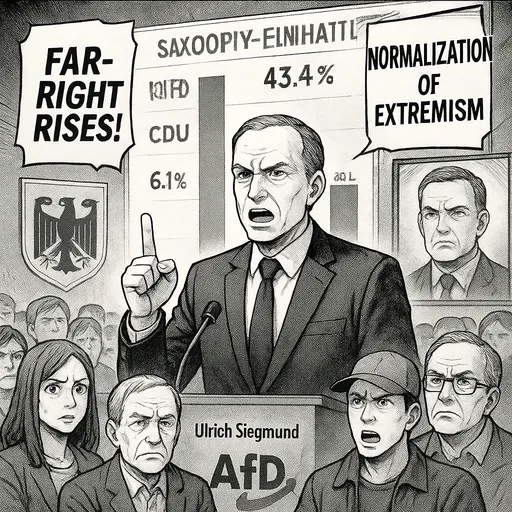
A wide range of international reports covers the Alternative for Germany’s (AfD) dramatic showing in Saxony-Anhalt, where exit polls and final counts put the party near or above 43–44 percent, though short of an outright majority. Coverage mixes straightforward result reporting with analyses of difficult coalition math, rising pressure on the CDU and speculation about consequences for national leadership and upcoming federal politics. Several pieces profile Ulrich Siegmund and other AfD figures, noting social-media reach and controversial pasts, while commentators and institutions—from EU capitals to German bishops—express alarm about the normalization of far-right positions. The campaign themes highlighted include immigration, security and economic anxiety, and many outlets warn the result could reverberate across Germany and Europe, intensifying polarization and debates over alliances and policy direction.
These outlets provide direct, factual coverage of the AfD’s performance in Saxony-Anhalt, reporting vote shares, exit polls and the immediate electoral outcome. Stories focus on numbers, seat implications and the basic status of majority or minority outcomes without heavy editorializing.
These pieces assess what the AfD’s strong regional performance means for coalition building, federal politics and party leadership, often stressing the challenges of forming a government and the pressure on the CDU leadership. Analysts weigh scenarios for national ramifications, potential government instability and strategic shifts among mainstream parties.
These articles focus on key personalities—especially Ulrich Siegmund—exploring their biographies, messaging, online followings and how individual figures helped drive the campaign. Profiles highlight how social media, personal narratives and controversial positions shaped voter appeal and raised scrutiny around leadership suitability.
This grouping captures coverage of AfD supporters’ jubilant reactions, nationalist messaging and public demands from party leaders, reflecting a triumphant tone among backers and assertive calls for political change. Articles document celebratory language and direct challenges to incumbent leaders as the party seeks to convert momentum into power.
Many international outlets and foreign politicians frame the result as a worrying development for Germany and the EU, issuing sharp condemnations, urgent commentary and calls for vigilance. Coverage emphasizes the geopolitical and normative stakes, with France, Poland and other capitals voicing particular concern and some leaders condemning celebrations of the result.
These reports highlight the AfD’s policy proposals (deportations, EU withdrawal), alleged extremist associations, and possible Russia-sympathetic elements, warning that electoral success could embolden radical positions and complicate foreign relations. Commentators link tactical gains to deeper concerns about democratic norms and geopolitical orientation.
A smaller set of pieces documents how the campaign intersected with cultural targets and institutional reactions—ranging from attempts to contest cultural memory to explicit condemnations from religious leaders. These stories underline how the AfD’s rise is provoking responses from non-party institutions defending cultural and moral norms.