
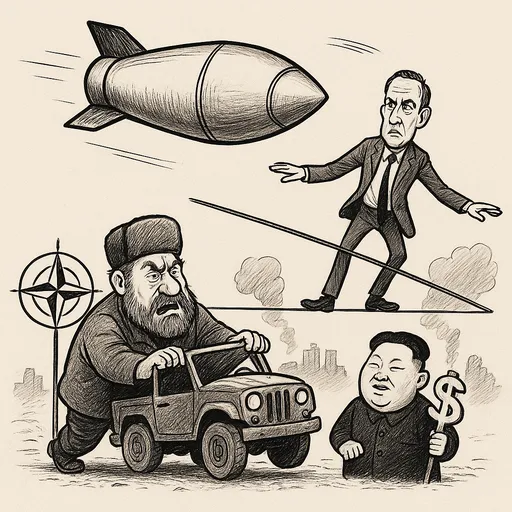
Across international reporting the main thread is the resumption of Russian strikes on Kyiv after brief pauses tied to diplomatic visits, with repeated air alerts and civilian casualties underscoring the fragility of temporary lulls. NATO and neighboring countries are reporting heightened readiness, scrambled jets, and concerns about Russian military activity near allied airspace, while analysts warn Moscow can sustain the campaign for years. Several pieces highlight the diplomatic stalemate: US envoy visits produced no breakthrough and leaders on both sides signal limited room for rapid compromise, even as some Ukrainian officials hint at possible winter de-escalation. Parallel coverage raises alarm about external support and proliferators — from alleged Chinese-component shipments to reported Russia–North Korea ties — and international voices call for legal and ethical scrutiny of emerging weapons such as autonomous drones.
Reports emphasize a new physical link between North Korea and Russia and frame it as a potential corridor for military, technical, or personnel exchanges. The perspective signals concern about regional geopolitics and how outside partners might bolster Russia amid the war.
Ukrainian outlets focus on renewed Russian drone and missile strikes on Kyiv and elsewhere, documenting civilian casualties, damage, and air-raid alerts while tracking military actions into Russian-held territory. They also relay President Zelensky's diplomatic comments on possible de-escalation, the role of U.S. influence, and internal security considerations.
Lithuanian reporting frames Moscow's moves as an escalating security threat, highlighting new Kremlin tactics, secrecy around Russian military losses, and concerns about Russian security services operating in Europe. The coverage urges close monitoring and readiness among allies.
Norwegian pieces stress the local and regional security implications of the Ukraine war, reporting on strikes affecting civilians, competing narratives about Ukrainian drone activity, and Moscow's warnings about Nordic military buildups. Norway's perspective emphasizes defensive preparedness and diplomatic friction with Russia.
Icelandic coverage provides concise reporting of renewed attacks on Kyiv and the humanitarian impact, reflecting international concern without deep editorialization. The tone is factual about escalation and civilian consequences.
Chinese reporting largely records that explosions or blasts were heard in Kyiv, delivering a neutral factual account in the immediate aftermath. The coverage is descriptive rather than interpretive about causes or responsibility.
Lebanese coverage highlights the end of a temporary pause and the resumption of strikes on Kyiv, noting the timing alongside diplomatic visits. The perspective underscores the conflict's volatility.
Paraguayan reporting links the renewal of strikes on Kyiv to recent diplomatic activity, noting the attacks' scale and the presence of foreign envoys. The coverage frames the events in international diplomatic context.
Slovenian pieces emphasize the fragile diplomatic process and cautious optimism that a negotiated settlement could emerge, especially concerning Donbas issues. The viewpoint stresses diplomacy but recognizes major obstacles.
Malian reporting documents frequent air-raid alerts and near-continuous bombardment of Kyiv, stressing the severe toll on civilians and infrastructure. The tone conveys alarm about the intensity of the campaign.
Croatian reports combine coverage of bilateral tensions with Russia and commentary on Russian military incidents, indicating concern about broader escalation and Moscow's strategic deadlines. The perspective mixes analysis and reporting on security risks.
Costa Rican coverage relays Ukrainian leadership assessments that the war may persist into another winter, balancing reports of constructive talks with skepticism about quick resolutions. The viewpoint is focused on the long-term outlook.
Romanian reporting details radar detections near the Ukraine border and readiness measures, including fighter jets on alert, reflecting heightened vigilance among NATO neighbors. The perspective stresses deterrence and airspace defense.
Bulgarian coverage notes attacks on Ukrainian facilities, such as damage to an international tobacco factory, highlighting the conflict's effect on business and civilian economic life. The angle underscores wider collateral impacts.
Cypriot reporting covers air-raid alerts and the termination of a short lull in strikes on Kyiv, giving a succinct account of renewed hostilities and local defensive responses. The focus is on immediate security developments.
Moldovan journalism reports Russian strikes causing casualties in Ukrainian towns while also examining Russian drone activity near Moldova's airspace, stressing national concern about spillover and civilian harm. The perspective emphasizes regional security implications.
Albanian pieces report Russian foreign ministry positions that reject Western accusations and frame incidents as potential preludes to broader confrontation. The coverage highlights diplomatic tensions tied to the conflict.
Uzbek reporting conveys Ukrainian concerns about potential winter strikes on energy infrastructure and related civilian anxieties over food and water security. The perspective focuses on humanitarian preparedness.
Austrian coverage spotlights humanitarian outreach and attention-raising visits to war-affected Ukrainian communities, emphasizing civilian resilience and international solidarity. The focus is on awareness and aid rather than military detail.
Mongolian reports link the return of U.S. officials with a near-immediate uptick in Russian missile launches, framing the timing as notable and risky for broader tensions. The perspective notes possible diplomatic–operational sequences.
Hungarian reporting relays stark warnings from the Russian foreign minister about possible broader conflict, reflecting Moscow's confrontational messaging toward European partners. The coverage highlights rhetorical escalation.
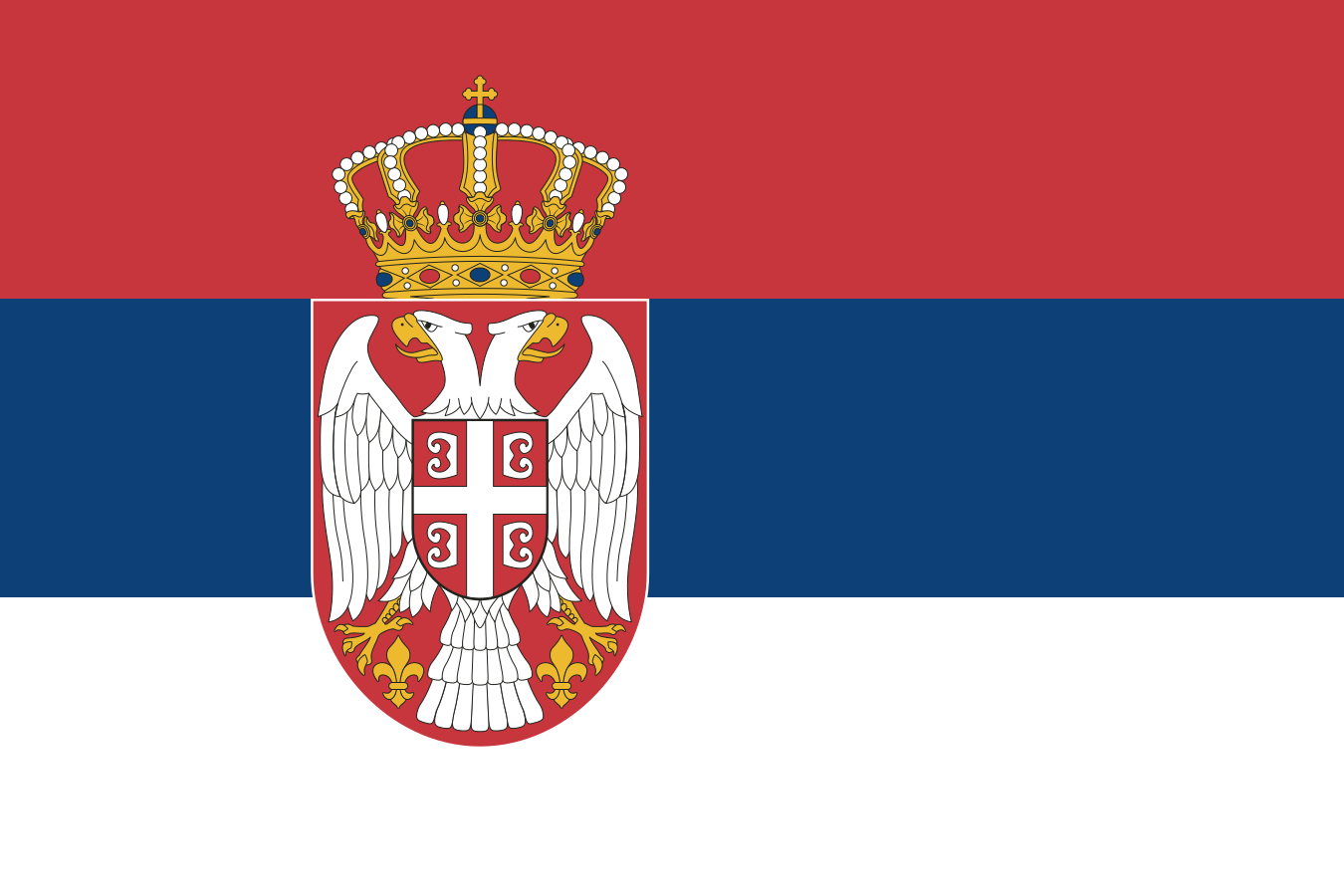
Serbian articles convey Russian claims that Moscow has set deadlines for military objectives such as Donetsk, and include local analysis questioning the realism of those timelines. The perspective tends to reflect and amplify Russian operational narratives.
Polish reporting covers both domestic security incidents and allied responses like scrambling fighters after attacks on Kyiv, stressing regional defense measures and public alerts. The view emphasizes preparedness and alliance coordination.
Reporting from the Vatican summarizes diplomatic exchanges and notes the lack of progress between envoys and leaders, underlining the difficulty of converting talks into concrete steps. The angle is centered on diplomacy and moral appeals.
Hong Kong reporting emphasizes that strikes on Kyiv resumed after a pause associated with visits by envoys, presenting a timeline-oriented account of escalation and its diplomatic context. The focus is on sequence and impact.
Zambian analysis highlights assessments that Moscow could sustain the war for several years and reports on reported Russian deployments to Belarus, framing the conflict as potentially long-term and regionally evolving. The viewpoint stresses durability and force posture.
Czech pieces convey Lavrov's assertions that reconciliation with the West is unlikely and allege Western economic pressure on Russia, reflecting Moscow's narrative while reporting local reactions. The focus is on rhetoric and its political resonance.
Greek reporting combines accounts of deadly strikes on Kyiv with analysis contrasting Putin's steadfast military objectives and Western views that some negotiation space remains. The perspective juxtaposes battlefield realities and diplomatic possibilities.
Finnish coverage records renewed strikes and civilian injuries alongside investigative reporting on foreign-supplied components sustaining Russia's drone production. The viewpoint mixes frontline reporting with concerns about external enablers.
Malaysian reporting notes a fresh series of blasts in Kyiv as Russia restarted strikes, offering a concise account of renewed violence and its local humanitarian implications. The coverage is largely factual.
New Zealand reporting highlights international human-rights concerns, including the UN rights chief's alarm over reports of fully autonomous 'killer' drones and calls for legal bans. The perspective emphasizes ethical and legal implications of emerging technologies in war.
Peruvian coverage relays Ukrainian statements about possible winter de-escalation while also reporting renewed strikes after a pause, reflecting both diplomatic signals and battlefield continuity. The pieces underscore the tension between talks and fighting.
US reporting links Russian strikes on Kyiv to the timing of visits by envoys associated with political figures, underlining the precarious interplay between diplomacy and military action. The perspective emphasizes geopolitical signaling and consequences for civilians.
Italian live coverage provides an evolving chronicle of resumed Russian strikes on Kyiv while also noting Ukrainian counterstrikes, including attacks inside Russia, giving a comprehensive real-time view of the military exchanges. The tone is operational and immediate.
Swedish reporting documents fatalities from strikes on Kyiv and notes broader worries about Russian interference in Western politics, reflecting both humanitarian concern and political-security anxieties. The perspective links battlefield effects and democratic vulnerabilities.
Danish reporting highlights renewed Russian attacks following American visits and details Russian dismissals of German allegations about drones as pretexts for escalation, underscoring diplomatic friction in Europe. The view stresses both military events and political disputes.
German coverage includes investigative claims that Chinese components sustain parts of Russia's war economy and reports on high-level diplomatic standoffs tied to drone incidents, reflecting concerns about sanctions circumvention and hybrid threats. The perspective is investigative and security-focused.
Pakistani reporting notes that Russia resumed strikes on Kyiv shortly after visits by envoys, framing the timing as notable and emphasizing renewed violence. The piece gives a concise account of escalation linked to diplomacy.
Georgian reporting covers Ukrainian strikes on occupied territories, reports of Russian relocation of Ukrainian children to North Korea, and the presence of foreign individuals joining Russian units, emphasizing the conflict's cross-border human and military dimensions. The perspective stresses regional spillover and human-rights concerns.
Russian-sourced reporting includes pieces on Ukrainian recruitment initiatives and internal information campaigns, reflecting Moscow's and Russian media's framing of the conflict and morale issues. The coverage is partly propagative and partly descriptive of military-civic initiatives.
Brazilian reporting documents that Russian strikes on Kyiv resumed after a brief pause, focusing on damage and the humanitarian toll in the capital and affected districts. The perspective is factual and concerned with civilian impact.
Estonian reporting highlights intensified strikes against Ukraine and concerns about Russian meddling in elections in other countries, combining frontline reporting with warnings about disinformation and interference. The view emphasizes both military and political threats.