
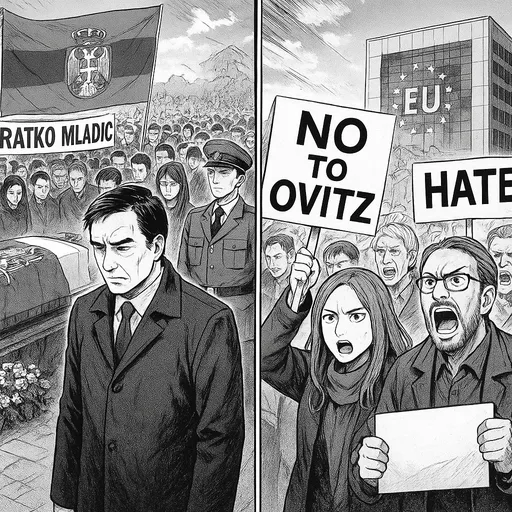
Thousands gathered in Belgrade to mourn Ratko Mladić, with his body lying in state, long queues to view the coffin and a state tribute preceding his burial. The ceremonies exposed a sharp divide: domestic scenes of honor and reverence contrasted with strong condemnation from EU institutions and Western commentators. Regional neighbours, particularly Croatia and Bosnia, expressed outrage and called for firmer diplomatic and legal responses, warning that the event risks destabilizing the Western Balkans. Analysts warn the funeral underlines persistent nationalist memory politics in Serbia and could be politically leveraged, complicating reconciliation and Serbia's European prospects.
Coverage highlights large public turnout, state tributes and mourners queuing to view the coffin, reflecting continued support or reverence for Mladić among many in Serbia. Reports focus on the funeral rituals, burial details and scenes of mass attendance across Belgrade.
European institutions and Western media condemned the public glorification of a convicted war criminal, issuing warnings and canceling engagements in Belgrade. These sources frame the funeral as a challenge to EU accession expectations and to broader reconciliation efforts in the region.
Neighbours, particularly Croatia and Bosnia, reacted angrily, calling on Brussels and regional partners to take stronger action and denouncing Serbia's handling of the funeral. The reportage stresses that the event has inflamed bilateral tensions and could produce diplomatic backlash.
Commentary situates the funeral within persistent nationalist memory politics, arguing it may be exploited for domestic political gain and will complicate reconciliation and international relations. Analysts warn the episode exemplifies how contested wartime legacies continue to shape regional stability.