

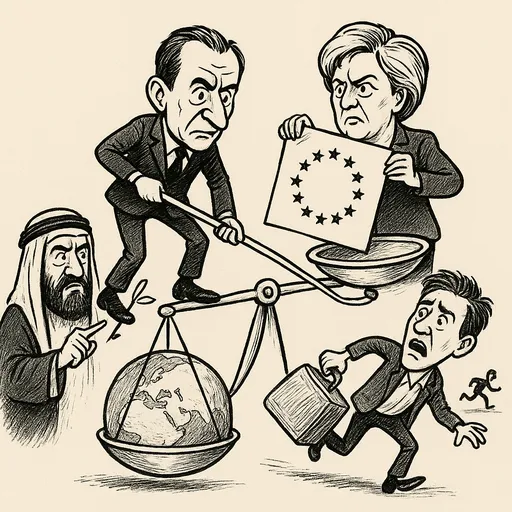
World leaders and senior officials are engaged across multiple fronts to manage conflict, deepen partnerships and navigate domestic pressures. Urgent diplomatic efforts center on ceasefire negotiations for Ukraine and Gaza, while regional actors and Iran offer mediation to ease Middle East tensions. The EU faces internal debates over enlargement, regulatory pacing and post-Brexit ties even as member states unblock parts of Ukraine’s accession process. Parallel tracks of soft diplomacy — state visits, youth exchanges, development pledges and international legal engagement — underscore a mix of rapprochement and friction driven by security incidents and political contestation.
Ukrainian and allied voices stress that any ceasefire must have clear, verifiable terms; Kyiv's leadership insists on conditions before agreeing to halt hostilities. Outside political actors have made competing claims about deals, while European leaders press for pauses tied to energy and humanitarian concerns.
EU members and domestic politicians debate the pace and conditions of enlargement alongside internal regulatory priorities and post-Brexit relations. Some states push to accelerate Ukraine’s path to membership while others seek mechanisms to slow or alter EU rules — reflecting competing national interests within the bloc.
Kazakh authorities emphasize deepening ties with European partners — particularly Belgium — and reaffirm support for regional stability, while Central Asian actors pursue broader diplomatic missions. State-hosted visits and public statements reflect a focus on trade, cultural exchange and measured engagement on international security issues.
Regional and external actors call for dialogue and de-escalation amid attacks and humanitarian crises; Iran and other states urge diplomatic channels with Yemen’s Houthis and broader negotiations to reduce tensions. Several governments and regional players publicly condemned attacks while offering mediation and pressing for restraint to protect civilians and regional stability.
African leaders and partners are using high-level summits and state visits to attract investment, strengthen cooperation and balance relations with major powers. Several delegations emphasize dialogue with a range of partners — from China to Israel — as part of a pragmatic, multi-vector foreign policy.
States respond to security incidents and allegations with expulsions, denials and competing narratives that heighten bilateral tensions. These disputes — from diplomatic recalls to contested claims about trafficking or base incidents — complicate cooperation and require careful diplomatic management.
Leaders and institutions underscore the role of human rights, international justice and normative frameworks in shaping diplomatic positions. From Nobel laureates visiting the ICC to calls against the death penalty and debates over non-proliferation and migrant/rights issues, these actors frame diplomacy around global norms and accountability.
Venezuelan officials highlight negotiations with international partners and domestic opponents as central to recent economic and social gains, while continuing to seek reintegration into international forums. These statements project a diplomatic narrative that talks with foreign actors can advance recovery and development goals.
Smaller states and civil society actors employ cultural exchanges, youth programs and parliamentary diplomacy to amplify their voices and build ties with larger partners. Initiatives range from youth climate representation and ‘Diplomat for a Day’ programs to parliamentary parity showcases and outreach about governance practices.
Actors on and around the Korean peninsula express a preference for dialogue and cautious engagement following security incidents, while unconventional offers of meetings by external leaders add unpredictability. Officials signal willingness to pursue talks rather than escalate militarily, emphasizing inter-Korean channels and diplomacy.
Domestic political debates and leadership statements influence foreign policy priorities and public diplomacy, as officials link internal reforms, economic discipline or national unity to international standing. These dynamics affect how countries present themselves and negotiate abroad.
Regional neighbours advocate governance reforms and community solidarity to strengthen transparency and development, combining technical advice with cultural diplomacy to reinforce regional ties. Initiatives include calls for procurement digitization and diasporic-led service projects that underscore bilateral goodwill.
Some states reassert commitments to development-focused partnerships and technical cooperation as central to their foreign policy, framing diplomacy around practical economic and sectoral collaboration. These communiqués aim to reassure partners and attract investment and cooperation.
Reports and claims about behind‑the‑scenes deals and high-level outreach reflect a strand of diplomacy driven by unconventional interlocutors and opaque arrangements. Such narratives influence public perceptions of bilateral engagement and complicate conventional diplomatic channels.