

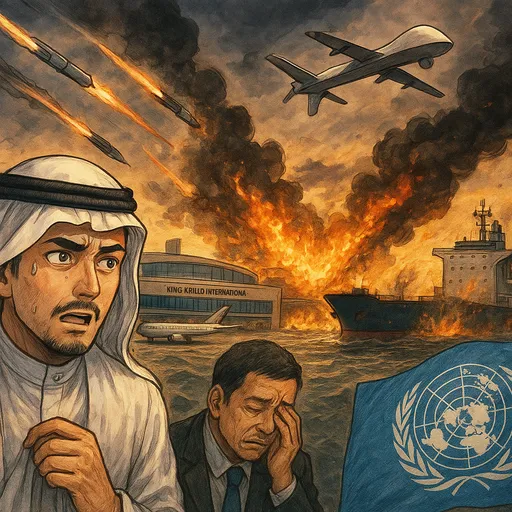
A wave of Houthi missile and drone strikes — including repeated claims of attacks on Riyadh’s King Khalid International Airport — has caused multiple casualties, forced prolonged airport closures and disrupted regional air traffic. Saudi authorities and the Saudi-led coalition have vowed strong responses, opened inquiries into defense gaps and reported intercepting projectiles, while some partners weigh whether to join or assist in retaliatory operations. Iran’s Islamic Revolutionary Guard Corps has separately claimed strikes on tankers in the Strait of Hormuz, raising maritime risks to energy and shipping routes and prompting broader international concern. The United Nations and many states condemned attacks on civilian infrastructure, issued travel warnings and urged restraint as analysts warn the fighting could widen to involve regional powers, increasing the risk of a broader conflagration.
Reports and statements from and about the Houthi movement emphasize responsibility for cross-border strikes and explicit warnings against foreign intervention. The coverage highlights repeated claims of attacks on Saudi facilities and threats of swift, painful retaliation if the United States or others directly intervene.
Gulf and coalition-oriented reports stress Riyadh’s condemnation of attacks, promises of a serious response and operational measures such as interceptions and strikes on Houthi sites. These pieces convey official stances focused on protecting infrastructure, investigating air-defence failures and coordinating possible countermeasures, including outreach to partners.
Many outlets report the immediate civilian effects: airport closures, flight suspensions and government travel advisories urging caution or avoidance of Saudi travel. Coverage documents cascading disruptions to international and domestic travel and the economic and safety consequences for passengers and airlines.
Reports attributed to Iran’s Islamic Revolutionary Guard Corps claim attacks on tankers and other vessels in and around the Strait of Hormuz, framing such strikes as enforcement of naval warnings and a pressure point against adversaries. This perspective links maritime incidents to broader regional tensions and potential impacts on global shipping and energy markets.
United Nations and foreign-government coverage emphasizes condemnation of attacks on civilian infrastructure and calls for de-escalation and adherence to international humanitarian law. Several states publicly denounce strikes, urge protection of civilians and discuss diplomatic or multilateral responses to rising hostilities.
Analytical pieces examine how Houthi capabilities challenged Saudi air defenses, probe apparent shortfalls in interception and early warning systems, and warn the conflict could broaden involving regional powers. These reports consider military, strategic and political implications and explore scenarios for further escalation or containment.
Separate but concurrent coverage details deadly explosions, attacks and Israeli strikes along the Israel-Lebanon frontier and continuing Gaza-related tensions, highlighting civilian casualties and security operations. These items reflect how multiple flashpoints around Israel, Lebanon and Gaza interact with or run parallel to the broader regional instability.
Coverage focused on Yemen describes tribal, local and coalition-ground developments — from tribal roles and reported gains near Bab el-Mandeb to claims about Aden airport's use — underlining the domestic military picture that fuels Houthi external actions. These articles stress internal contestation in Yemen as a driver of cross-border escalation and regional security consequences.