

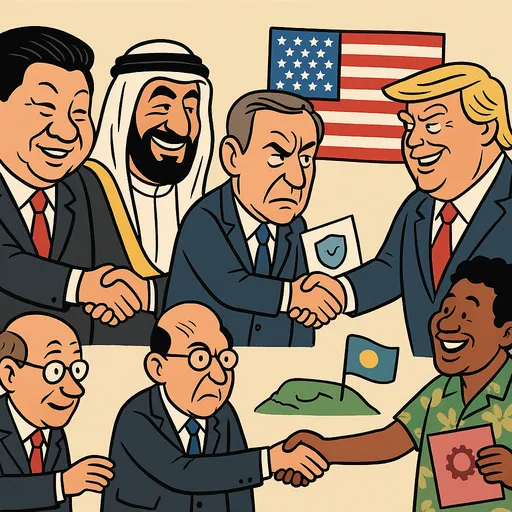
Recent bilateral agreements and high-level engagements show an intensifying push for connectivity, trade and strategic partnerships across regions. China’s diplomatic and economic outreach features prominently, while Gulf states and their partners pursue energy and security pacts that reshape regional dynamics. Europe, the United States and other partners advance trade and defence cooperation even as budget and regulatory tensions persist. Small island and Pacific states are securing development and technical support, and numerous education and infrastructure deals underscore an emphasis on long-term capacity building.
Chinese diplomacy and investment are portrayed as central to partner countries’ development and strategic plans, from long-standing ties to new infrastructure and technology cooperation. Sources emphasize China’s expanding role across the Caribbean, Pacific, Southeast Asia and Eurasia as a provider of connectivity, training and political support.
Gulf states and their partners frame recent agreements as pragmatic steps to stabilise energy markets and strengthen security cooperation in the face of regional threats. Coverage highlights mutual reassurance, joint drills and diplomatic reaffirmations that aim to keep energy and defence cooperation 'above' political discord.
European and transatlantic sources emphasise deals and initiatives intended to safeguard industrial capacity, ease trade frictions and accelerate defence innovation. Reporting also underscores internal EU political debates and post-Brexit trade diplomacy shaping broader economic alignments.
Small island states and external partners highlight targeted development assistance, technical transfers and people-to-people links as core priorities for resilience and private-sector growth. Donor and multilateral support is framed as practical, capacity-building cooperation rather than grand strategic manoeuvres.
African governments and external partners present a mix of investment diplomacy, port and customs integration, and shifting influence among Gulf and international actors. Coverage stresses infrastructure, trade facilitation and strategic competition as drivers of these bilateral initiatives.
Central Asian reporting focuses on practical agreements to expand parliamentary ties, media cooperation, urban infrastructure reviews and regional cultural initiatives. The perspective stresses incremental institutional links and people-to-people exchange as the backbone of deeper bilateral relations.
Sources from the region highlight both diplomatic strains and expanding economic outreach, from ambassadorial disputes to investment and trade proposals. Coverage frames bilateral moves as consequential for regional stability and market access.
Governments emphasise education, university partnerships and cultural exchange as long-term, non-contentious pillars of bilateral engagement. Reports describe agreements and programs designed to build skills, link institutions and foster mutual understanding.
Several pieces raise questions about oversight, autonomy and the governance implications of cross-border cooperation, from security arrangements treated as foreign to debates over sovereignty in external agreements. The perspective underscores scrutiny of transparency, regulatory arrangements and national prerogatives in bilateral deals.
Reporting highlights the practical importance of restoring and expanding transport links and remittance channels to facilitate trade and mobility. These items are framed as enabling regional commerce and integration rather than grand strategic statements.
Sources emphasise commercial transactions and targets aimed at boosting energy cooperation and bilateral investment flows, from asset sales to renewable expansions and trade goals. The perspective is pragmatic, focused on concrete economic outcomes and project-level commitments.