

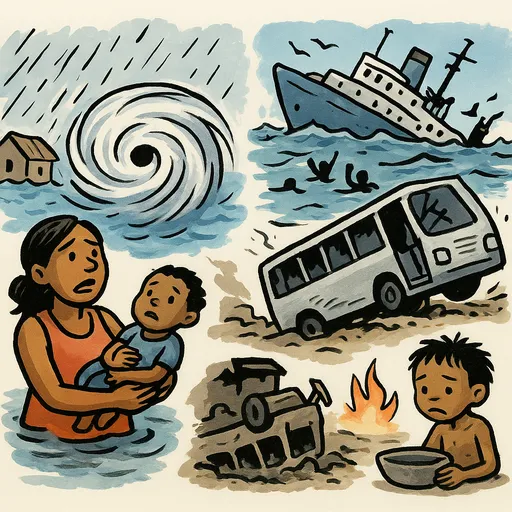
This set of reports shows a world contending with concurrent natural hazards, deadly transport incidents and large-scale humanitarian crises. Atlantic and Pacific storms (notably Hurricane Simon and Tropical Storm Rachel) have battered Mexico and neighboring areas, prompting evacuations, damage assessments and multiple confirmed deaths. Maritime disasters — particularly a mass migrant boat capsize off Djibouti — and numerous road, bus and aviation crashes have produced heavy casualty tolls and stretched search-and-rescue operations. Localized but consequential events, from the Paris market fire and Ecuadorian oil spills to Nepal’s renewed floods and widespread child malnutrition in Somalia, highlight environmental, infrastructure and protection gaps that require coordinated relief and longer-term recovery efforts.
International and regional outlets report on Hurricane Simon, Tropical Storm Rachel and related weather systems as major threats to coastal communities, emphasizing emergency warnings, evacuations and damage assessments. Coverage focuses on fatalities, flooding and the mobilisation of local authorities and meteorological agencies to protect residents and infrastructure.
Multiple international reports frame the capsizing as a human-trafficking and migration catastrophe, stressing the high death toll, many missing and the dire conditions migrants face at sea. Coverage highlights IOM statements and continuing recovery and identification challenges amid calls for humanitarian attention.
Reporting portrays renewed and recurring flood threats in Nepal with a humanitarian emphasis on displacement, damaged homes and threats to children’s welfare. UNICEF and local authorities are cited as coordinating evacuations and monitoring impacts on thousands of children, underscoring the need for relief and resilience measures.
Regional coverage contrasts Malaysia’s offered assistance with Indonesia’s internal push for tougher enforcement, noting Jakarta’s focus on domestic prevention and response rather than accepting outside aid. The perspective highlights tensions in cross-border cooperation even as haze and peat/forest fires continue to present public-health and environmental risks.
European and international outlets emphasize the cultural and community impact after the historic covered market was devastated by fire, documenting firefighters’ efforts and pending investigations into the cause. The coverage centers on emotional local reaction, the market’s heritage value and short-term disruption for vendors and visitors.
Reports focus on environmental damage and public-health risks from an oil spill and heavy rains that have caused rivers to overflow, disrupting drinking-water supplies and prompting agency-led monitoring and cleanup. The perspective stresses ecological impacts, infrastructure vulnerability and the need for coordinated remediation.
Several human-interest pieces highlight dramatic rescues — people found alive after falling or becoming trapped — and active search operations involving divers and emergency teams. Coverage underscores the effectiveness of coordinated rescue responses while reminding readers of the risks of maritime and exploration activities.
Reports from multiple countries recount deadly or injurious roller-coaster accidents, focusing on immediate emergency response, victim transport and the opening of safety investigations into rides and operator procedures. The perspective raises questions about mechanical integrity and regulatory oversight at theme parks.
A broad set of accounts detail high-fatality road crashes, bus collisions and several military and training aircraft accidents, with reporting concentrated on casualty figures, rescue activity and investigations into causes. The viewpoint stresses systemic safety concerns in road, bus and military aviation operations and the immediate strain on emergency services.
Coverage links chronic and acute humanitarian needs — from alarming child malnutrition in Somalia and thousands of Palestinian children maimed, to refugee-camp fires and formal aid donations — stressing both urgent relief needs and moral/political calls for assistance. Reporting highlights international appeals, faith-based messages and donor actions while calling attention to protection gaps.
Argentine authorities temporarily restricted access to Iguazú Falls because extreme river flows produced hazardous conditions, emphasizing visitor safety and environmental impacts tied to anomalous weather patterns. Coverage frames the closure as a local safety measure with implications for tourism and park management.
Reports focus on a widening fissure in the Alps and elevated avalanche risk, noting monitoring by authorities and warnings to residents and tourists. The perspective stresses preventive advisories and the potential disruption to mountain communities and winter tourism.