

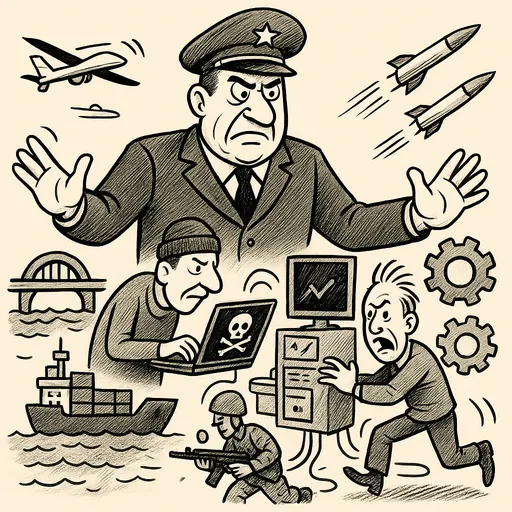
A widening set of coordinated and asymmetric threats is straining regional and international security systems. Maritime drone and missile strikes in and around the Black Sea and repeated Houthi attacks on Saudi targets have disrupted shipping, airports and prompted travel advisories. Simultaneously, large-scale cyber intrusions have crippled supermarket refrigeration, manufacturing and transport links, while espionage incidents inside major AI labs and platform outages have exposed new vulnerabilities in trusted institutions. Western intelligence services warn of expanded hybrid campaigns — including state-backed plots, AI-enabled threats, and attacks on military facilities — prompting heightened military exercises, protective measures and cross‑border consultations.
Sources in and about the Gulf emphasise an acute, immediate security threat from Houthi strikes and related failures in air defences, prompting travel advisories and airport closures. Governments and companies are responding with investigations, alerts and operational restrictions to protect civilians and critical energy and transport infrastructure.
UK and allied intelligence chiefs frame Iran’s behaviour as a strategic shift toward targeting military bases and using hybrid means, while flagging AI and cyber as force multipliers for state and non‑state actors. Those warnings drive increased defensive postures, interagency cooperation and public alerts across Europe and beyond.
Reporting from Europe highlights targeted cyber intrusions that disrupted refrigeration, inventory and logistics at supermarkets, revealing the fragility of digitally managed supply chains. Authorities are investigating attribution while retailers and prosecutors call for stronger industrial cyber resilience and cross‑border cooperation.
Regional outlets describe a spike in drone and missile attacks on commercial shipping off Bulgaria’s coast, producing sinkings, missing sailors and diplomatic fallout. The incidents underscore an emerging maritime threat that imperils trade routes and demands coordinated naval and investigative responses.
Reports from technology hubs stress novel espionage risks after concealed listening devices were found in AI company meeting rooms and employees were arrested. Coverage frames the incidents as a wake‑up call for internal security, counterintelligence and the protection of sensitive R&D.
European media and intelligence sources convey persistent concerns about Moscow’s covert operations, including alleged meddling in democratic processes and potential targeting of Western politicians. The reporting calls for vigilance, protective security measures and sustained counterintelligence efforts across the continent.
Regional reporting highlights the consolidation of armed groups — notably Joseph Kabila’s new political‑military front and M23 linkages — and separate cross‑border skirmishes that risk wider instability. Analysts warn these alignments and incidents could fuel displacement, complicate peace efforts and draw neighbouring states into security responses.
East Asian sources stress that recent North Korean ballistic launches have prompted consultations among South Korea, the US and Japan, reflecting allied efforts to coordinate deterrence and intelligence sharing. The coverage underlines concern about ballistic modernization and the need for multilateral readiness.
Reports from Europe and beyond show that false hijack alerts, radio glitches and emergency responses — alongside real attacks that have closed major hubs — are testing air‑safety procedures and contingency protocols. Authorities are reviewing communication channels, interception rules and passenger advisories to reduce risks and disruptions.
National reporting covers alleged assassination attempts, explosive caches and politically charged security incidents that have targeted high‑profile leaders and created fears of destabilisation. Governments and police are responding with arrests, investigations and heightened protective measures for officials and institutions.
Analysts and tech reporting flag the tactical effects of platform outages, bot silencing and AI‑generated hoaxes on public discourse, emergency services and propaganda flows. The perspective stresses how disruptions to information ecosystems can blunt influence campaigns and simultaneously create new vulnerabilities.
Coverage from the Pacific and Asia points to China’s expanding basing and military activity, US‑China cyber tensions, and questions about Western policy and militarisation in the region. The narrative frames infrastructure build‑outs and cyber operations as part of broader geopolitical jockeying requiring diplomatic and security responses.
Industry reporting highlights large cyber incidents that have halted automotive production and disrupted major construction or transport projects, showing attackers can impose severe economic and operational costs. The viewpoint calls for improved cyber hygiene, incident response and insurance practices across sectors.
Coverage focused on Ukraine emphasises gaps in early‑warning systems and the operational challenges of defending civilian areas from missile strikes; allied leaders note the need for better intelligence sharing and air‑defence coordination. The reporting points to persistent risks to urban infrastructure and the humanitarian consequences of strikes.
National pieces document contested security policies: prosecutions tied to terrorism or sabotage, and domestic measures such as planned releases of low‑level gang collaborators. The angle weighs trade‑offs between law enforcement, judicial process and public safety.