

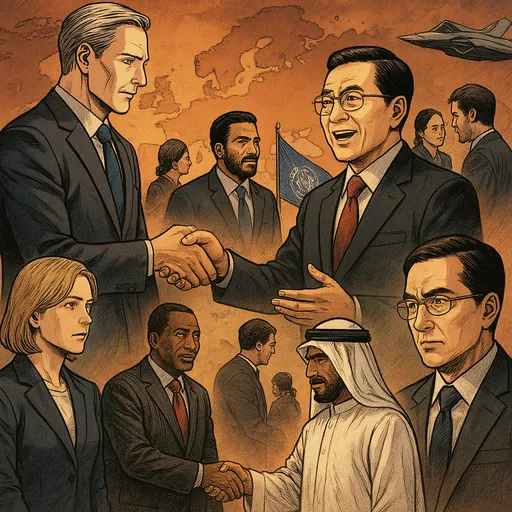
World leaders and institutions are actively engaging across multiple fronts: Western states coordinate on Ukraine’s security and EU accession while pursuing peace proposals, even as high-profile visits and meetings underline continued political and public signaling. China deepens bilateral ties with African and Pacific partners through state visits and development initiatives, while the Gulf and Middle East actors press for mediation amid humanitarian concerns. Multilateral forums — the UN, human rights bodies and the Vatican — emphasize links between climate, socio-economic justice and human rights, and smaller states advance education and municipal diplomacy to strengthen connectivity. Simultaneously, a spate of bilateral disputes, expulsions and contentious domestic policies reveal friction points from Europe to Latin America and Africa. Defense, territorial issues and regional security (from Okinawa to the Kurils and F-35 talks) remain central themes intersecting with efforts to manage migration, elections and historical memory.
Western leaders and stakeholders emphasize unified support for Ukraine’s security, diplomatic engagement toward negotiated outcomes, and accelerated EU accession processes. Discussions span high-level meetings, peace proposals involving the US and Europe, and intra-EU decisions to open accession clusters for Kyiv.
Chinese leadership and African counterparts signal a mutual drive to strengthen political and economic partnerships through state visits, provincial-level engagements and broader diplomatic commitments. Beijing’s initiatives are presented as long-term cooperation on infrastructure, maritime roles and development, with African leaders advocating deeper strategic collaboration.
Gulf and regional actors frame diplomacy around mediation, humanitarian concerns and critique of external responses, with offers to facilitate talks and strong language on civilian suffering. International NGOs and UN bodies amplify calls for accountability and renewed diplomatic efforts on Syria, Gaza and related crises.
Spanish officials project sovereignty and national unity through high-profile visits to Ceuta while pairing diplomatic messaging abroad with human-rights framing in international settings. Spain’s outreach to partners in venues such as Doha underscores linking rights and peace in bilateral diplomacy.
The Holy See, UN electoral and human-rights bodies, and advocacy actors stress ethical dimensions of global policymaking, tying climate action, decolonization and human-rights engagement to peace and justice. Elections to rights bodies and Nobel recognition also highlight the continuing role of moral authority and historical memory in international diplomacy.
States and networks prioritize educational and media cooperation as tools of soft diplomacy, sharing technical experience and participating in international conferences to build capacity and regional linkages. These engagements reflect an emphasis on long-term development, sovereignty in knowledge systems and regional integration.
Asia-Pacific actors foreground regional resilience through ASEAN-focused cooperation, bilateral calls for reintegration, and state-level cultural and security engagements. Officials emphasize digitalisation, green economy and supply-chain collaboration as pillars of regional strength.
A range of diplomatic frictions — expulsions, summoned envoys, domestic policy disputes and territorial sensitivities — reveal tensions in state-to-state relations and assertions of sovereignty. Many governments publicly rebuke perceived interference while urging non-interference and legal recourse.
Belgian royalty and Kazakh authorities highlight technological cooperation and innovation diplomacy through high-profile visits and showcases, framing tech ties as a platform for deeper bilateral relations. The engagements emphasize economic and scientific collaboration as a soft-power vector.
Caribbean states engage regionally through CARICOM missions and dialogues with external partners to support electoral integrity and broader cooperation. These efforts reflect a focus on regional coordination, election support and diversified international partnerships.
Ethiopia’s external outreach — congratulatory exchanges and talks with diverse partners — sits alongside African Union calls for de-escalation in regional disputes, underscoring a dual track of bilateral engagement and continental mediation. Regional actors call for transparency around border incidents and prioritized diplomatic solutions.
UK political leaders debate deepening ties with the EU against a backdrop of Brexit-related disputes and shifting domestic politics, with opposition and governing voices urging renewed cooperation without committing to concrete measures. Domestic debates shape the UK’s external posture and influence regional diplomacy.
States are actively negotiating defense procurement, base policies and territorial sensitivities while reviewing force posture and interoperability, reflecting persistent security concerns across alliances. These talks range from F-35 discussions to base liberty policies and disputed island visits, tying domestic incidents to broader diplomatic negotiations.