

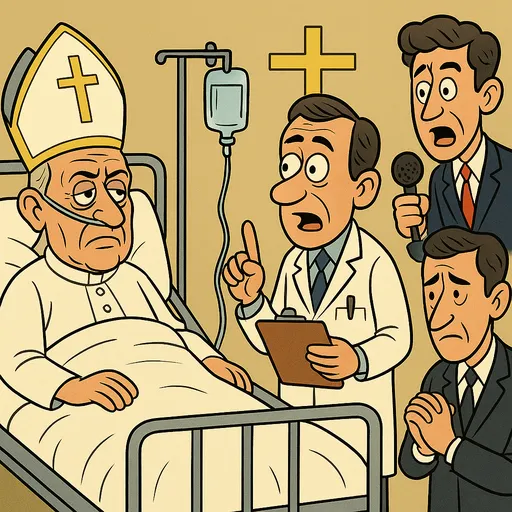
Vatican officials report that Pope Leo XIV underwent a successful surgical procedure to remove a pulmonary nodule and tissue tests confirmed pulmonary adenocarcinoma. The pope is in hospital recovering under close medical observation; Vatican statements describe his condition as stable and say further tests and follow-up treatment will be decided by medical teams. Coverage diverges between straightforward medical bulletins, accounts that emphasize surgical and hospital details, and reports weighing implications for travel and Vatican scheduling. Communities and leaders around the world have offered prayers and public support, while separate items highlight cancer diagnoses in members of the pope’s family.
These articles relay formal Vatican bulletins and straightforward international reports confirming the diagnosis and the pope’s postoperative status. They focus on official statements about the operation, the pope’s recovery in hospital and the decision to monitor and determine further treatment.
These pieces emphasize clinical and procedural specifics—timing, surgical technique, the hospital where the operation took place and the composition of the medical team. They describe the Gemelli Polyclinic setting, the reported 90‑minute intervention, removal of a lung portion and other operational details.
These reports highlight the immediate practical consequences of the pope’s illness for planned visits and public engagements, noting canceled appointments and uncertainty about upcoming South American trips. They discuss how hospitalization and recovery timelines could alter the papal itinerary and Vatican operations.
This cluster draws attention to cancer diagnoses affecting members of the pope’s family, underlining the personal and human side of the story. Coverage frames the pope’s condition alongside reports that brothers or relatives are also receiving cancer treatment.
These articles provide clinical context about pulmonary adenocarcinoma, explain the diagnosis and outline likely follow‑up monitoring and treatment paths. They aim to inform readers about the type of cancer identified and what it typically implies for prognosis and care.
Coverage in this group emphasizes community responses—prayers, statements of support, and adjustments to liturgical leadership or services while the pope is hospitalized. Reports note national and local expressions of solidarity and shifts in Vatican worship planning.
This article raises questions about Church governance and the procedures in place should the pope be incapacitated, placing the medical update in the context of canonical and administrative contingency. It outlines who would assume responsibilities if the pope could not govern.