

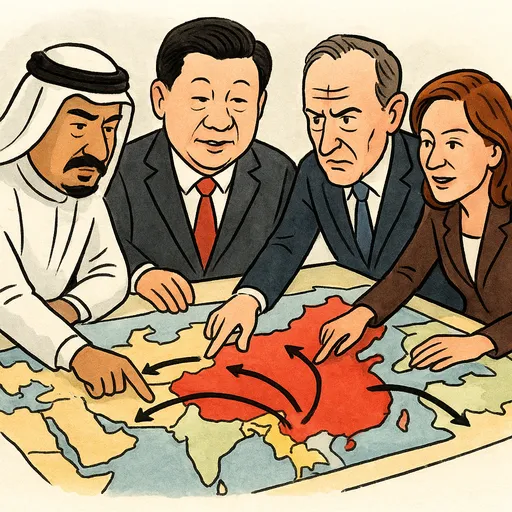
Recent reporting shows a broad uptick in bilateral agreements and diplomatic moves spanning infrastructure, defense, trade, governance and people-to-people ties. China’s footprint is prominent in infrastructure, payments and trade initiatives, while Gulf states and other regional powers are consolidating influence through targeted diplomacy and energy cooperation. Western partners and regional powers are deepening defense and security ties, and numerous countries are opening or upgrading diplomatic representation to expand political and economic engagement. Concurrently, migration, transport and standard-setting talks—along with multilateral summits—are converting strategic intent into concrete projects and cooperation mechanisms.
Chinese actors and partners emphasize building physical and financial links to expand market access and regional influence. Coverage highlights infrastructure projects, payment-system ties and trade forums presented as enablers of deeper China–partner economic integration.
Gulf states and regional Arab partners are portrayed as actively reshaping influence through investment, energy deals and security assurances. Reports underscore competition and coordination in Africa and the broader Middle East as states seek strategic footholds.
Several governments frame bilateral ties chiefly around security cooperation, arms and logistics support to bolster regional stability or interoperability. These stories reflect renewed or continued defense linkages between European, African and Asian states and Western allies.
States are expanding formal diplomatic footprints and symbolic ties to deepen bilateral relations and advance political objectives. Coverage emphasizes embassy openings, senior visits and representation appointments as tools to widen engagement and influence.
Governments and firms stress economic cooperation—energy projects, trade targets, investment cycles and fintech linkages—to promote growth and market access. The articles show varied bilateral economic strategies from large-scale energy deals to targeted industrial and financial partnerships.
States and regional organizations focus on rule-of-law, anti-corruption, judicial cooperation and accession-related reforms as prerequisites for deeper integration. Reporting highlights both bilateral memoranda and EU accession steps as part of broader governance alignment.
Countries address movement of people and goods through migration accords, aviation policy changes and reopened rail links to restore connectivity and manage cross-border flows. Stories show technical and humanitarian elements—return operations, flight restorations and transport reopenings—framing bilateral cooperation in practical terms.
Development partners and regional institutions present targeted funding and capacity support to Pacific island states as part of sustained bilateral and multilateral engagement. Coverage highlights donor commitments and small-scale equipment transfers aimed at private-sector and public-service strengthening.
Reporting frames Russia’s outreach to African states as a push to turn summit declarations into concrete projects and to sustain military and security partnerships. African leaders and Moscow are shown emphasizing practical cooperation across defense and strategic domains.
Bilateral ties are also expressed through academic exchanges, joint research and sectoral technical forums intended to build capacity and harmonize standards. Coverage ranges from higher-education linkages to sectoral standardization efforts in health and science.
Senior-level visits and commission meetings are highlighted as vehicles to advance sector-specific cooperation—from agriculture to urban infrastructure. These accounts emphasize relationship-building and the negotiation of practical, project-level commitments.
Smaller European and North Atlantic jurisdictions frame bilateral cooperation as a route to pool resources and pursue large projects in strategic northern regions. Advisors and firms point to joint ventures as a way to capitalize on emerging Arctic opportunities.