

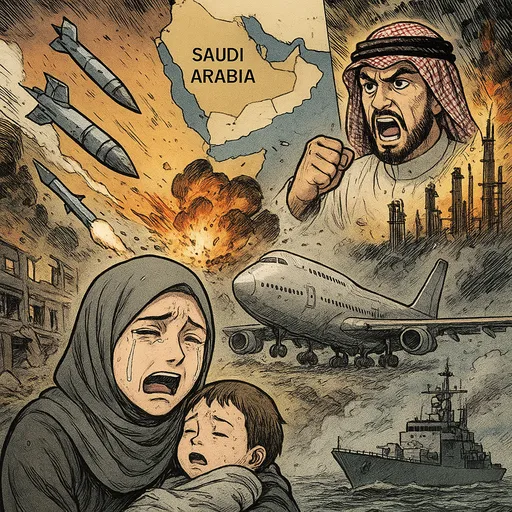
A sharp escalation centered on the Yemen conflict has seen Houthi forces increasingly strike Saudi infrastructure — including Riyadh’s airport and energy sites — and claim large numbers of cross‑border strikes, while Saudi‑led coalition forces have launched retaliatory attacks on Sanaa and Yemeni oil facilities. The exchanges have disrupted aviation, raised casualty counts, and put Gulf energy assets at risk, prompting international concern about wider market and security consequences. At the same time, separate but connected drivers — Iranian‑linked maritime pressure in the Strait of Hormuz, US warnings and naval deployments, and hardline rhetoric inside Israel around Gaza and the West Bank — are raising the danger of broader regional involvement. United Nations officials and humanitarian reporters warn of mounting civilian suffering in Yemen and Gaza and call for de‑escalation even as governments and militias signal readiness to escalate further.
Sources aligned with Saudi, coalition partners and supportive governments portray recent operations as necessary precision strikes to deprive the Houthis of funding, logistics and military capabilities and to protect Saudi territory and regional aviation. Reporting emphasizes targeted actions on Yemeni oil infrastructure, evacuation warnings for civilians ahead of operations, airport closures and international cooperation to contain threats to energy and transport hubs.
Reports from or focused on the Houthi campaign emphasize the rebels’ sustained attacks on Saudi targets, claimed strike tallies, growing missile and drone capabilities and warnings of painful retaliation should external powers intervene. Coverage highlights Houthi strikes on airports and Aramco facilities, threats against energy companies, and the group’s evolving weapons manufacturing and tactics that challenge Saudi air defenses.
Coverage from regional and international outlets frames Iran’s actions in the Gulf and Strait of Hormuz as deliberate escalation aimed at influencing broader geopolitics, including US policy and shipping routes, while Washington and allies respond with warnings, naval deployments and public threats. Reports focus on ship strikes, changing Iranian tactics to pressure maritime traffic, and political rhetoric from US and Israeli figures that could widen the conflict.
Domestic Israeli voices and allied commentators showcased in the reporting emphasize a readiness for forceful responses, with settler leaders and ministers advocating hardline measures and government officials stating contingency plans if Palestinian forces turn to arms. These pieces underscore how extreme rhetoric and security planning within Israel amplify tensions in Gaza, the West Bank and across the region.
United Nations officials, humanitarian reporters and independent outlets focus on the civilian toll, urgent protection needs and calls for ceasefires and accountability as hostilities intensify. Coverage documents civilian deaths and displacement in Yemen and Gaza, damaged livelihoods and cultural life, UN appeals for permanent ceasefires, and condemnations of attacks on civilian infrastructure amid warnings that escalation will deepen the humanitarian crisis.