

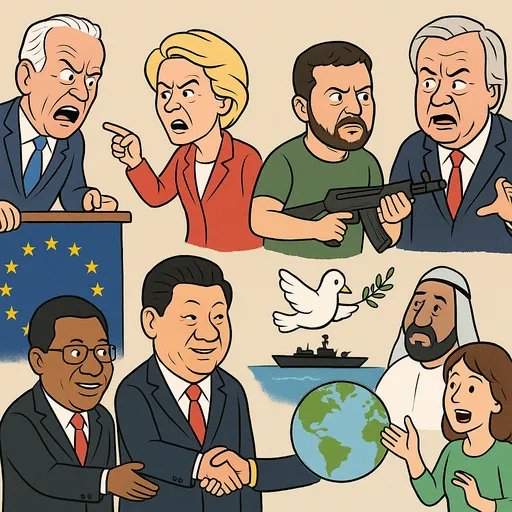
Leaders and senior officials met across multiple forums this period to manage security risks, deepen bilateral ties and press for institutional reform. Western capitals intensified diplomatic and military support for Ukraine while intra-EU debates and some member states complicated Kyiv’s accession and aid prospects. In the Middle East and North Africa, calls for ceasefire, unity talks and maritime security measures competed with shifting regional alignments and international mediation efforts. China advanced outreach through trade, media and development initiatives even as Africa pursued greater agency in UN reform and regional cooperation. Parallel tracks on development, education and climate convened civil society and governments to translate diplomacy into practical cooperation.
Western governments and leaders reiterated political and military backing for Ukraine while also managing frictions within and between allies. Visits to the UK, high-level meetings and statements sought to shore up aid and diplomatic support even as EU member states debated accession ambitions and domestic critics questioned continued funding.
Regional and international actors emphasized de-escalation, humanitarian protection and securing shipping routes as diplomatic priorities. The cluster captures appeals for ceasefire and unity talks among Palestinian factions, naval-security requests to protect Red Sea transit, and UN and state actions addressing Gaza, Lebanon and wider Gulf tensions.
Beijing used diplomatic, trade and media initiatives to broaden influence, promote development cooperation and encourage educational and cultural exchange. Chinese messages and events highlighted engagement with Africa, export and trade fairs, and efforts to shape international reporting and cooperation agendas.
African states and leaders pursued greater representation and cooperative action through regional forums, UN engagement and bilateral ties while addressing development and security challenges. Initiatives spanned nominations for global posts, conventions against child soldier recruitment, demographic planning and debates about external influence on the continent.
States engaged in debates over international institutions, budgets and governance—pushing reform agendas, defending national positions and contesting resolutions. Topics included calls to reset the global financial system, EU budget fights, UN committee debates on self-determination and OSCE security cooperation projects.
A wide array of state visits, ambassadorial exchanges and regional dialogues underscored diplomacy focused on trade, education, security partnerships and cultural ties. Leaders and ministers met across continents to strengthen practical cooperation, from education and human resources to defense attaché talks and parliamentary forums.
Several countries moved forward with internal negotiations and institutional transitions aimed at stabilizing politics and resolving crises. This includes new rounds of dialogue in Venezuela, negotiations and leadership votes in Kosovo, opposition dynamics in Belarus, and returns or reshuffles in regional governments.
Leaked documents, proposed summitry and public narratives highlighted ongoing competition among major powers and their regional partners. The cluster reflects debates over influence in Europe and Africa, possible high-level meetings between leading figures, and domestic political pushes that influence foreign policy choices.
Governments and civil society prioritized resilience, inclusion and capacity-building through forums on climate adaptation, disability inclusion and cross-border education and workforce development. These efforts aimed to translate diplomatic ties into concrete programs in health, skills and climate resilience ahead of global summits.
Security partnerships, naval deployments and diplomatic protests signalled a focus on protecting strategic waterways and deepening defence ties. Requests for foreign naval presence, military visits and ambassadorial démarches demonstrate how maritime security, regional stability and defence cooperation remain central to leaders’ dialogues.