

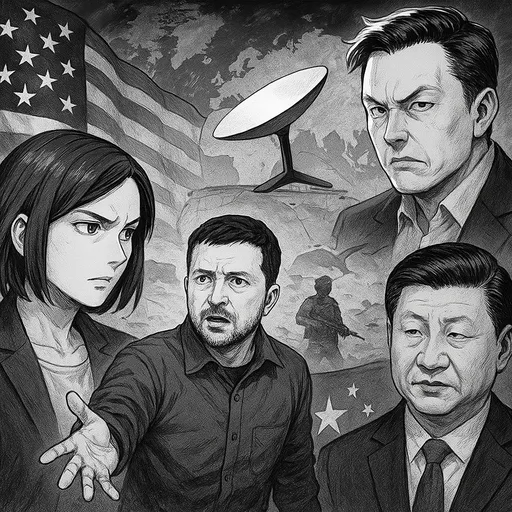
Recent reporting shows mounting strain in U.S. foreign policy as Ukraine openly accuses Washington of weakening support amid intelligence and Starlink restrictions, and President Zelensky warns Kyiv may be losing the U.S. as a partner. A parallel dispute centers on SpaceX’s Starlink/Starshield access: Elon Musk repeatedly points to U.S. government control while lawmakers demand answers as battlefield communications are affected. The Trump-era diplomatic posture, personnel moves and public statements continue to reverberate globally, prompting criticism and political realignments across regions. At the same time Washington is expanding its security footprint in Latin America, drawing sovereignty concerns, while China and other powers interpret U.S. moves as symbolic signals in great-power competition. Misinformation episodes about senior officials’ whereabouts and calls from global institutions to rein in U.S. fiscal and legal reach add to perceptions of an unsettled diplomatic moment.
Ukrainian leaders and allied commentators voice sharp frustration toward the United States, alleging reduced intelligence sharing, insufficient missile alerts and harmful restrictions on vital communications. Kyiv frames these developments as eroding trust and jeopardizing Ukraine’s defense, portraying a crisis in the transatlantic partnership.
Private-sector actors and U.S. officials clash over Starlink/Starshield access for Ukraine, with Elon Musk attributing slowdowns or restrictions to U.S. government or Pentagon control. The debate highlights tensions between battlefield needs, corporate decisions and government oversight, and has prompted congressional scrutiny and public accusations.
Statements and personnel choices linked to Donald Trump continue to shape international perceptions—from hardline rhetoric on Iran and public remarks about Russia to controversial ambassadorships and staffing decisions. These moves have provoked criticism from foreign leaders, civil society and Nobel laureates while energizing sympathetic figures in the Americas.
Washington is expanding its security presence and exercises in Latin America, citing counternarcotics and counterterrorism objectives, with deployments and cooperation framed as regional security priorities. Host governments and observers, however, express concerns about sovereignty, transparency and the scale of U.S. footprint.
Several partner countries have pushed back on U.S. comments or activities perceived to impinge on sovereignty or local sensitivities, from Chile’s protest over ambassadorial remarks to scrutiny of U.S. operations and influence in the Pacific and Latin America. These incidents illustrate friction in bilateral ties and the limits of U.S. public diplomacy in sensitive areas.
Beijing and regional actors read U.S. policy moves as geopolitical signals, challenging American narratives on issues from cyber activity in the Pacific to Taiwan and regional influence. Commentators see U.S.-China competition playing out across diplomacy, education exchanges and regional ceremonies, with each side framing actions as strategic messaging.
Rumors and reports about the FBI director’s alleged visit to Russia prompted swift denials by U.S. officials, underscoring the volatile information environment around high-profile U.S.–Russia interactions. The episode highlights how unverified claims can quickly shape foreign-policy narratives and provoke diplomatic attention.
International institutions and analysts warn about the global consequences of U.S. fiscal policy and the extraterritorial application of American law, urging Washington and other wealthy nations to address rising debt and the broader impacts of U.S. legal leverage. These economic critiques frame diplomacy within questions of global financial stability and legal authority.
U.S. positions on Iran and Gaza reconstruction have triggered regional pushback and recalibrations, with Tehran and local actors calling for policy changes while partners navigate competing pressures. Israeli objections to elements of U.S.-led reconstruction proposals and Iranian public messaging reflect a contentious diplomatic environment.
Trilateral consultations on North Korea and congressional travel by U.S. lawmakers reflect ongoing allied coordination that extends beyond executive diplomacy. These interactions underscore the multiple channels—military, legislative and diplomatic—that the United States uses to project influence and manage regional security partnerships.