

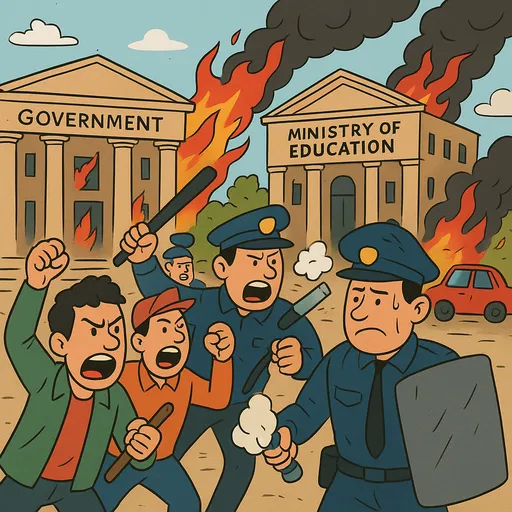
Protests in Tirana turned violent, with demonstrators clashing with police and setting government buildings — including a government department and the Education Ministry — on fire. Authorities deployed tear gas, detained dozens, and imposed security measures while some reporters faced restrictions. Eyewitness footage and reports describe attacks on police stations and vehicles, and at least one account lists 29 injured and 35 arrested. Coverage frames the unrest variously as student-led anger over education policy and as broader political discontent, highlighting risks to governance and the potential for further escalation.
This perspective emphasizes the immediate escalation of clashes in Tirana, focusing on a government building being attacked and set on fire. It also notes police detentions and restrictions on journalists as authorities moved to control the situation.
This account highlights the human cost and law-enforcement response, citing specific figures for injured and arrested protesters and documenting ongoing violence across a second day. It stresses the scale of confrontations and the authorities' efforts to restore order.
This report focuses on demonstrators setting a government department on fire and on police dispersal tactics such as tear gas. The piece frames the unrest as a visible expression of widespread public discontent without naming individuals.
This viewpoint draws on video evidence to underline attacks directed at police infrastructure, including a police station and vehicles set alight. It emphasizes the disorderly and confrontational nature of the protests captured on footage.
This narrative frames the unrest primarily as student-led protests that escalated to torching the Education Ministry, linking the violence to tensions over higher education policy and funding. It highlights youth grievances and concerns about governance responses to student demands.
This perspective situates the unrest within broader political tensions, noting widespread property damage and clashes with police while considering the potential consequences for governance. It interprets the demonstrations as symptomatic of deeper political disputes.