
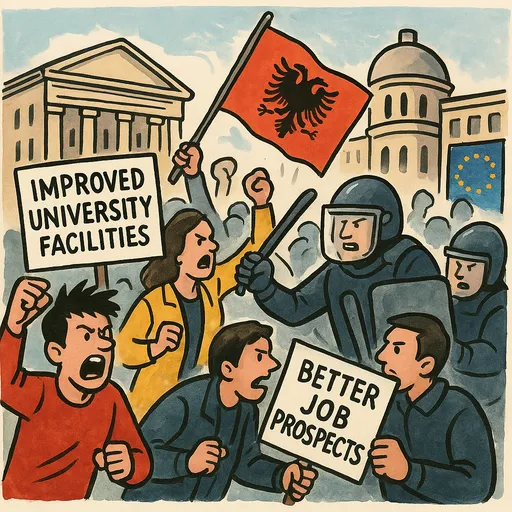
Students in Tirana staged a second consecutive day of protests, with demonstrations targeting government ministries and other official buildings. Some demonstrations escalated into clashes with police, producing reports of injuries, arrests and the storming of government premises. Protesters demand improved university facilities, relief on tuition, and better job prospects for graduates, reflecting broader public discontent with current policies. The European Union has expressed concern and urged dialogue and peaceful resolution as authorities manage the unrest.
Reports from these sources emphasize the violent turn of events, describing clashes with police, injuries, arrests and attacks on government ministries. They portray the protests as volatile and underline the security and public-order dimensions of the unrest.
These accounts focus on students' stated grievances and reform demands, highlighting calls for better university facilities, lower tuition burdens and more job opportunities for graduates. They frame the protests as driven primarily by socio-economic and education-sector concerns rather than solely as political confrontation.
This perspective stresses international/regional implications, noting that the European Union is monitoring the situation and urging peaceful dialogue. It highlights diplomatic concern about how the unrest could affect EU-Albania relations and the need for a negotiated response.