

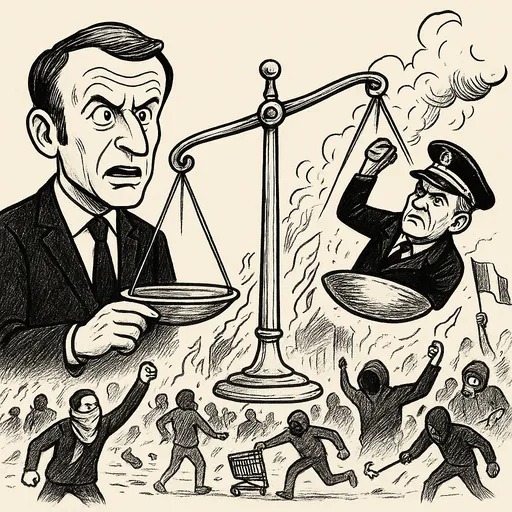
Widespread demonstrations over the cost of living and related grievances have spread across France, drawing hundreds of thousands nationwide and producing some of the worst unrest in years. Protests frequently turned violent, with widespread looting, arson, hundreds of injuries and thousands of arrests reported in multiple cities. President Emmanuel Macron and senior ministers have repeatedly condemned the violence, pledged firm punishments, and announced security measures including potential bans on gatherings. Analysts and commentators warn the unrest could have significant political and economic consequences, intensifying debates over policy, policing and France’s social cohesion. The events have attracted international attention and polarized commentary, with disputes over causes, police tactics and political responsibility dominating coverage.
Reports in this group emphasize official reactions: President Macron, interior and defence ministers condemned the violence, promised prosecutions and reparations, and announced tougher public-order measures including possible bans on gatherings. Authorities framed the unrest as criminal or destabilizing acts that require firm enforcement while stressing the need to protect lawful protest and restore order.
This group focuses on immediate facts and visuals from the streets — turnout numbers, mass arrests, injuries to police and protesters, looting, arson and extensive property damage documented in photos and eyewitness accounts. Coverage stresses the heavy policing response, logistical disruptions and the human and commercial costs of the unrest across multiple French cities.
These articles place the unrest in context, exploring drivers such as rising living costs, education grievances, legacy movements (e.g., Yellow Vests) and structural reforms while assessing likely political fallout for Macron and upcoming elections. Commentators and analysts probe how socio-economic pressures, mobilization networks and opposition actors may reshape policy debates and electoral calculations.
A smaller set of pieces highlights external or politicized takes — foreign leaders and commentators using the unrest to advance narratives about migration, extremism or to criticize Macron, while domestic political actors seek to capitalize on the crisis. These reports underscore how the protests have been reframed internationally and by partisan voices into broader political arguments.
Coverage in this cluster centers on severe injuries, a reported death, and allegations of harmful crowd-control tactics that have raised human-rights and policing concerns. These reports foreground the physical toll of confrontations and calls for investigation into police methods and accountability.