

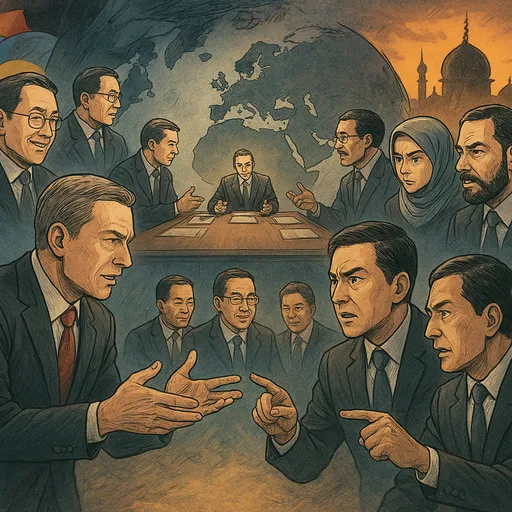
World leaders are intensifying diplomacy on multiple fronts: Russia has proposed high‑level summitry with other major powers while Ukraine and its partners press for inclusion and clearer negotiating formats. Regional diplomacy is active across the Middle East and Gulf on de‑escalation, Hormuz security and Arab mediation, and Egypt is pushing coordinated efforts with neighbours on Libya and broader regional stability. African states are mobilising around UN leadership contests, continental summits and security dialogues, even as China deepens bilateral cooperation on infrastructure, agriculture and climate with partners worldwide. Southeast Asian cross‑border disputes over haze, European domestic political tensions, and targeted security consultations in East Asia (North Korea) round out a global picture of dialogue aimed at reducing conflict and shaping strategic partnerships.
Russian sources emphasise top‑level diplomacy as a way to reshape negotiations over Ukraine and to deepen ties with partners in Africa and Asia. Moscow frames proposed summits and outreach as initiatives to open direct dialogue among major powers and to expand Russia’s diplomatic footprint.
Ukrainian and allied sources focus on sustaining talks with the United States and other partners to advance peace negotiations while warning against exclusion from processes that affect Kyiv. Officials emphasise both the urgency of dialogue and concerns about formats that might sideline Ukraine’s direct participation.
Egyptian diplomacy highlights proactive engagement with regional partners to stabilise nearby crises, notably backing Libya’s political process and urging coordinated de‑escalation measures. Cairo is portrayed as a convening actor seeking practical steps and UN‑led solutions.
Gulf states and regional interlocutors prioritise collective security responses to Houthi attacks, Strait of Hormuz arrangements and emerging Israel–Gulf dynamics, stressing defence cooperation and mediation. Religious and international actors also call for halting regional wars and strengthening diplomatic channels to ease tensions.
African diplomatic coverage centres on the UN leadership race and continent‑level representation, with withdrawals and vetoes reshaping candidacies and prompting reflection on Africa’s voice in multilateral institutions. Nations stress continued engagement to secure fair representation in global governance bodies.
African leaders and envoys stress African‑led strategies, sustained dialogue and local ownership to resolve conflicts, coordinate security measures and advance development priorities. Continental summits and bilateral missions are portrayed as mechanisms to translate talk into actionable regional policies.
Chinese engagement is depicted through calls for deeper Sino‑US green cooperation, bilateral development projects and targeted technical deals, from agriculture to climate action. Observers frame China as a key partner in both global environmental diplomacy and bilateral economic initiatives.
Regional reporting stresses cross‑border environmental disputes, notably haze from Indonesian fires affecting Malaysia, and governance concerns such as disqualification from regional human rights forums. States are balancing domestic leadership critiques with the need for cooperative regional responses.
European sources highlight internal political tensions—from rule‑of‑law disputes to provocative rhetoric—and the diplomatic reverberations these create within and beyond the EU. Leaders’ statements and reactions reflect anxieties about security, governance and cross‑border relations.
Small island states are actively engaging major partners—attending US‑Caribbean dialogues and other forums—to strengthen ties on trade, security and climate resilience. Regional leaders frame these visits as important steps for external partnerships and development cooperation.
Libyan officials are presenting political visions to international think tanks and seeking wider support for reform and governance restoration. The outreach aims to attract practical backing for a UN‑led transition and stability measures.
Maldives coverage combines an official state visit to Pakistan with short international briefs on multiple partners, reflecting the island nation’s outward diplomatic orientation in the Indian Ocean. The updates signal efforts to manage foreign relations across diverse regional actors.
Kazakh authorities and visiting European delegations spotlight domestic institutional innovations as part of broader Eurasian engagement and outreach. Observers note interest from European delegations in Kazakhstan’s governance models.
South Korea, the United States and Japan are conducting close consultations in response to North Korean missile activity, underscoring a cooperative security posture in Northeast Asia. The talks emphasise deterrence and coordination among allies.
Royal audiences and official visits underline Brunei’s ongoing diplomatic engagements and institutional adjustments, signalling routine but visible state‑level interactions with regional partners. The coverage frames these events as elements of Brunei’s foreign relations choreography.
Israeli leaders are publicly seeking diversified alliances beyond traditional partners while diplomatic friction and contested reports about attacks draw scrutiny from partners. The perspective stresses both strategic outreach and crisis management amid shifting regional ties.
Commentary from the region highlights how domestic controversies—such as debates over the veil—can expose and test the resilience of close alliances between Turkey and Azerbaijan. Observers warn such cultural‑political issues may have diplomatic consequences.