

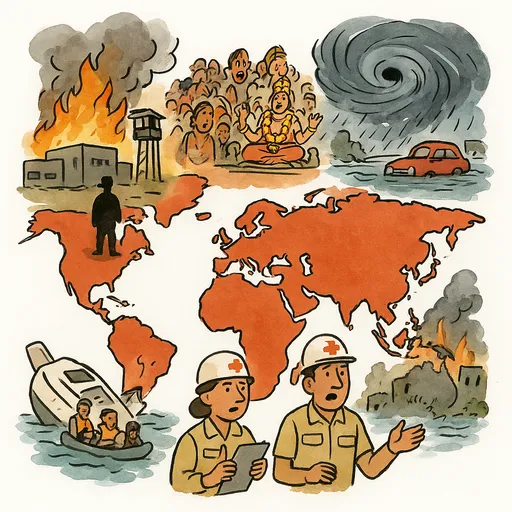
Recent international reporting highlights a surge of diverse disasters demanding urgent relief and investigations: a large, fast-moving fire at a Canadian military training base causing multiple deaths and many injuries; deadly stampedes at crowded Hindu religious gatherings in India; and severe weather events from Hurricane Trudy on Mexico’s Pacific coast to storms and floods across Spain and Turkey. Maritime and aviation accidents, including capsized boats off Djibouti and Mexico and a Nigerian military plane crash, have added pressure on search-and-rescue services. Regional wildfires across Indonesia, Papua New Guinea and parts of the United States continue to produce cross-border haze and calls for international assistance, while conflict zones such as Gaza, Yemen and Darfur face growing humanitarian needs and urgent calls for safe aid corridors. Across these stories governments and relief agencies are mobilising evacuations, medical response and investigations, even as varying casualty totals and causes remain under inquiry.
Reports from many countries focus on the human toll and ongoing investigations into the cause and safety protocols after a rapidly spreading fire at a Canadian training base. Coverage highlights differing early details (grass fire, wind-driven wildfire or explosion) but consistently stresses large casualty figures, mass evacuations, hospitalisations and official promises of inquiries and support for families.
Multiple international outlets report deadly crowd crushes at large Hindu gatherings in India, emphasising failures in crowd management and the role of sudden heavy rain in triggering panic. Coverage varies in casualty totals between events but converges on calls for improved safety at mass religious festivals and investigations into how to prevent repeats.
Mexican weather authorities and national outlets emphasise imminent heavy rain, high seas and strong winds from Hurricane Trudy and advise coastal residents and mariners to prepare or evacuate. Reports stress coordinated official advisories—including navy cautions—to limit maritime accidents and prompt local emergency readiness.
Coverage of maritime accidents highlights emergency rescues, ongoing search operations and stark death tolls from capsized or sinking vessels. Reports stress the roles of nearby ships and coastguard teams in lifesaving transfers and the urgent need for maritime safety enforcement and search capacity.
Regional reporting on fires in Indonesia, Papua New Guinea and nearby areas underscores transboundary haze, health impacts and appeals for international assistance to combat extensive burn scars. U.S. reports of wildfires and local accounts emphasise firefighting challenges and the environmental consequences of rapidly spreading blazes.
Stories about building and amusement-ride accidents focus on sudden structural failures or tragic accidents and subsequent calls for investigations into safety oversight. Coverage links these events to concerns about construction or operational standards and the need for accountability and preventive measures.
Reporting from diverse outlets emphasises humanitarian operations amid conflict: convoyed aid and medical outreach in Gaza, WHO warnings about rising casualties in Yemen, and UN calls for aerial humanitarian access to Darfur. The perspective stresses constrained access, urgent medical need, and international efforts to deliver relief under insecure conditions.
European and regional media highlight severe Mediterranean storms that triggered floods, infrastructure damage and fatalities across Spain, with local authorities issuing alerts and carrying out rescues. Coverage underscores urban and coastal vulnerabilities to intense rainfall and the ongoing risk of additional storms.
Turkish and international reports focus on torrential rain in Istanbul leading to fatalities, large-scale evacuations and disruption to city services. The emphasis is on emergency mobilization, rescue operations and warnings to residents to avoid flood zones.
Coverage on Venezuela, Bangladesh and Haiti emphasises deep, persistent humanitarian needs—from lack of basic goods and food insecurity to mass displacement driven by violence—calling for sustained aid and policy responses. Reports portray long-term crises that worsen with climate shocks and economic collapse.
The report on a Nigerian military ATR-42 crash focuses on immediate fatalities, emergency response at the scene and the launch of official investigations into the cause. The coverage is framed around casualty management and accountability measures by military authorities.
Seismological bulletins and news items report earthquakes in Pakistan and Russia’s Kamchatka region, emphasising early assessments, possible damage and readiness of local relief agencies. The tone is initially informational while monitoring for later casualty and damage reports.
Coverage of Cyclone Wati, Typhoon Champi preparations and harbour damage stresses urgent island-level preparedness, emergency declarations and concern for ports and supply chains. Reports highlight international and national readiness measures and calls for contingency relief funding.
A local report on a fatal shark attack in Sydney frames the incident as an acute public-safety and beach-management concern, prompting beach closures and investigations into preventive measures. The focus is on immediate emergency response and public warnings.
A domestic crime-related fire that killed an entire family is covered as a community tragedy, describing funeral rites and ongoing investigations. Reporting emphasises communal grief and the procedural steps of local authorities.