

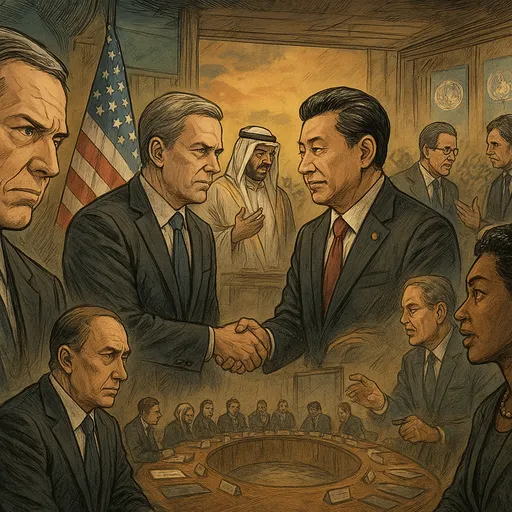
World leaders and high-level actors are pursuing multiple, sometimes competing, diplomatic tracks to manage crises and expand cooperation. Several proposals and public offers for trilateral meetings involving the United States, Russia and China have surfaced, while parallel, more incremental mediation efforts target the Ukraine war—ranging from Norway-hosted talks to Vatican appeals. Gulf states, notably Qatar and the UAE, continue to stress mediation and security cooperation as regional tensions rise, even as African actors press for locally led strategies and UN leadership reforms. Simultaneously, China is deepening ties across Central Asia and beyond, and multilateral institutions—from biodiversity forums to UN bodies—remain key venues for shaping global responses and norms.
Proponents in this group argue that a high‑level trilateral meeting among the United States, Russia and China could create a platform to address arms control and the Ukraine conflict. Other voices, including some official spokespeople, caution that concrete agendas and substantive arrangements are not yet in place and that such summits carry significant diplomatic risks.
This cluster centers on active mediation efforts and coordination to manage the Ukraine war, with Norway and U.S. envoys playing facilitating roles and the Vatican urging humanitarian pauses and cooperation. Kyiv remains wary of unfavorable settlement frameworks, while diplomatic exchanges focus on ceasefires, aid access and the sequencing of negotiations and security guarantees.
This group highlights Moscow’s deepening engagement with Tehran as part of broader regional diplomacy and mediation, alongside related diplomatic frictions such as denied consular access in Russia. The perspective emphasizes strategic alignment between Russia and Iran on regional security while acknowledging international scrutiny and bilateral sensitivities.
Gulf governments portray themselves as both strengthening defensive capabilities and acting as mediators to reduce regional tensions, advocating dialogue-based approaches. European partners and regional interlocutors feature prominently in these discussions as leaders juggle security, economic ties and crisis management.
African diplomats and leaders are pushing for Africa‑led strategies on peace and security, sustained dialogue, and adequate financing while the UN leadership contest and related withdrawals reshuffle regional influence. The view stresses local ownership of solutions and increased engagement with global partners, including new Russia‑Africa outreach narratives.
China is portrayed as expanding bilateral cooperation and influence across Central Asia through technical, political and economic channels, while Central Asian states engage both Beijing and Western partners in multilateral formats. The perspective notes Beijing’s growing role as a regional interlocutor on security and development issues.
A broad set of bilateral visits, cultural diplomacy, training exchanges and regional conferences illustrates how states pursue practical cooperation and image‑building beyond headline crises. These engagements range from capacity‑building and health diplomacy to historic commemorations and Caribbean and Pacific ties.
Reports in this group focus on high‑level meetings and controversies around Israeli politics and regional policy—ranging from aides’ past ties to Gulf actors to contentious meetings and international pressure over settler violence. The perspective highlights how domestic politics and external partnerships shape Israel’s diplomatic posture.
This cluster underscores ongoing work within international institutions—UN leadership, biodiversity and climate forums, human rights elections, and governance scrutiny in global sports bodies—as arenas where norms and rules are negotiated. States and nonstate actors use these venues to press agendas on disarmament, biodiversity, accountability and terminology for emerging technologies.
This group captures focused security consultations in regions from Northeast Asia to Europe and the Nile basin, reflecting alliance management, consultations on missile launches and disputes, and hydropolitics that require transboundary dialogue. The perspective emphasizes operational coordination, deterrence postures and the diplomatic management of shared resources.