

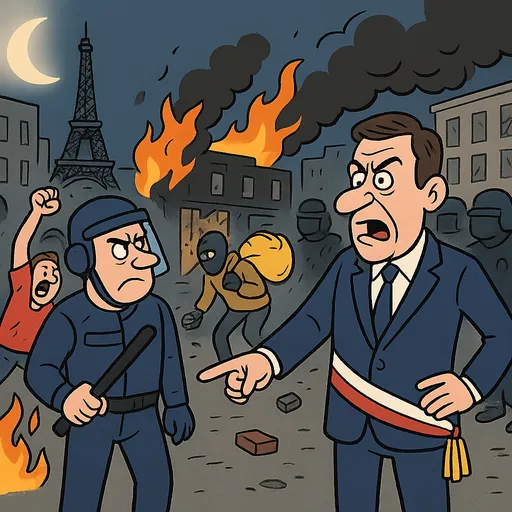
A wave of mass protests over living costs and public grievances has led French authorities to impose partial night-time curfews across Paris and other cities while boosting police deployments. Demonstrations turned violent in many places, with looting, property damage and thousands of arrests reported, prompting crisis talks and consideration of emergency powers. The unrest has triggered sharp political debate at home over security failings and government handling, and drawn international concern, travel warnings and commentary about wider European instability. Analysts and commentators warn that heavy-handed measures risk escalating tensions even as officials insist they must restore order and protect citizens.
Reports from a wide range of international outlets focus on the immediate government response: partial and localized night curfews, increased police presence and area-specific restrictions to curb late-night violence. Coverage is largely factual, listing where curfews were imposed, enforcement plans and official rationales for the measures as authorities try to restore order.
Several dispatches quantify the scale of the crackdown and the disturbances, reporting large numbers of detentions and mass arrests as authorities sought to regain control. These pieces stress the law-enforcement dimension of the crisis and the immediate public-order consequences of the riots.
Many outlets emphasise the domestic political consequences: criticism of security failings, ministerial tensions, questions over leadership and the potential electoral impact for President Macron. Coverage highlights debates about responsibility, calls for inquiries, and opposition framing that the unrest has become a major political crisis ahead of upcoming votes.
Foreign media and ministries frame the unrest as an international safety concern, issuing travel warnings and advising nationals to avoid crowds while noting spillover reporting in Europe. This perspective stresses impacts on travellers and the diplomatic dimension of large-scale domestic unrest.
Analysts and opinion pieces caution that imposing curfews and hard security measures risks provoking further protests and eroding civil liberties, arguing for dialogue and careful policy rather than escalation. These commentaries place emphasis on social causes of unrest and warn against measures that may deepen grievances.
Some sources treat the unrest as a political warning for other countries and as fodder for migration and law‑and‑order narratives, with commentators and politicians linking the events to immigration, populist opportunity and wider European instability. This strand frames the protests as potentially benefiting the far right or reflecting deeper societal shifts.
Coverage highlights government deliberations about stronger legal and security tools, including boosting police numbers, crisis meetings and the possible use of state-of-emergency powers. These pieces emphasize official calculations about extraordinary measures to restore order and protect infrastructure.
Many reports catalogue the material toll: luxury shops and thousands of smaller businesses damaged, cultural sites affected, and government aid measures discussed to support impacted traders. This viewpoint stresses the economic and social cost of the unrest for communities and businesses.
Analytical and local pieces focus on the composition and motives of protesters—students, Yellow Vests and other groups—explaining mobilisations, calls for further action and the complex mix of grievances driving the demonstrations. These accounts try to unpack who is protesting and why, and note planned follow-up mobilisations.
A small set of reports focuses on allegations of police misconduct and incidents involving journalists, raising concerns about accountability and the balance between policing and civil‑liberties protections. These stories highlight scrutiny of law‑enforcement tactics amid the unrest.