

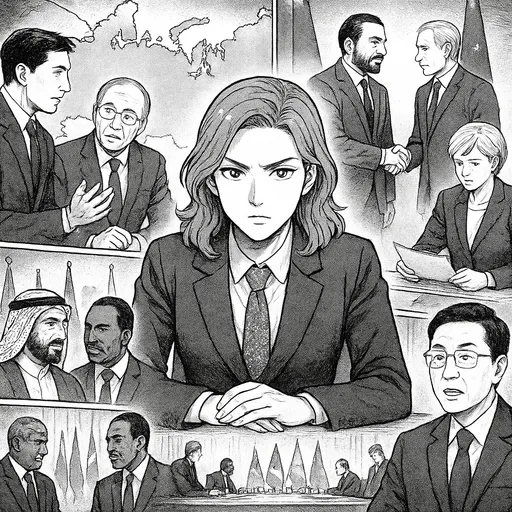
World leaders and envoys intensified a flurry of bilateral and multilateral talks this period, with the Ukraine conflict dominating diplomatic efforts from Oslo to St. Petersburg and Moscow. Western governments and Ukrainian officials pressed for sustained military, political, and humanitarian support while private envoys sought channels for ceasefire proposals and direct outreach to Russia. At the same time, major-power diplomacy showed competing alignments: Russia deepened ties with Iran and sought broader summitry, China advanced cooperative propositions and Pacific engagement, and the EU pushed defence mobility and Arctic and reconstruction agendas. Regional diplomacy continued in parallel—Gulf mediation, African development initiatives, Latin American disputes, and multilateral forums like the SCO, CICA and UN convenings all shaped a crowded calendar of negotiation and contestation.
This cluster reflects perspectives focused on sustaining Ukraine's voice and securing Western political, military, and mediation support. Reports emphasize Zelensky's active diplomacy in Oslo and Norway, close coordination with U.S. envoys and special intermediaries (including Witkoff), and efforts to translate talks into proposals or ceasefire discussions with Russia.
This grouping highlights Moscow's outreach and partnerships, including high-level Russia–China engagement and closer ties with Iran, as well as Kremlin readiness to receive envoys. Articles underscore Russia's framing of strategic issues—nuclear-era warnings, proposals for summits, and active diplomacy toward African and regional partners.
European perspectives prioritize deeper defence coordination, regional stability and rule-of-law concerns while managing internal divisions over support for Ukraine. Coverage ranges from the Military Schengen idea and the EU Arctic Strategy to Balkan disputes, budget and political machinery commentary, and debates over member-state choices on Ukraine aid.
Gulf and regional actors are presented as active mediators and security stakeholders, urging de‑escalation and safeguarding trade and energy links. Reports record Qatar and Oman hosting high-level visitors, Saudi security-driven event postponements, Iran’s regional proposals and nuclear stances, and bilateral engagements addressing Lebanon, Jordan and North African consular cooperation.
China’s diplomacy and broader Asian dynamics appear across security, development and regional influence narratives: Beijing’s global proposals, Pacific outreach, responses to trafficking claims, and East Asian bilateral ties. Reports also cover Japan‑UK diplomatic threads and regional contestation over maritime security.
Regional coverage emphasizes rising frictions and electoral-era disputes, with diplomatic rows between Argentina and Brazil, internal Venezuelan transition talks, and contestation over interference and rhetoric from political leaders. The perspective highlights how domestic politics are spilling into bilateral relations across South America.
Israeli viewpoints stress defence rationale and high-level engagement to shore up alliances, with official explanations of military actions, presidential state visits, and ministerial meetings with U.S. counterparts ahead of elections. The cluster captures rhetoric and bilateral outreach shaping Israel’s external ties.
African-sourced pieces focus on development initiatives, regional commitments and accountability debates, from China-backed development agendas and convention signings to calls for apartheid-era justice and preparations for Russia–Africa engagements. The perspective underscores both external partnerships and internal governance priorities.
This cluster groups reporting on institutional diplomacy at bodies like CICA, SCO, CIS, TurkPA, the UN and the Pacific Islands Forum, highlighting member-state arrivals, agenda items on connectivity, security and human rights, and plans for future meetings. The emphasis is on how regional and global forums are being used to coordinate policy and advance collective goals.
National-level political dynamics and governance issues surface in reporting on leadership priorities and controversies, from Japanese leadership remarks and Georgia’s opposition ban concerns to Romania’s government approval. The pieces reflect how domestic politics intersect with external perceptions and international relations.
Coverage here centers on efforts to manage cross-border violence and coordinate international peace initiatives for Sudan, including protests after shelling and the convening of Geneva coordination meetings to support peace processes. The perspective underscores urgent regional humanitarian and security coordination.
This pair of reports highlights international cooperation on nature and oceans, from historic protection of the Sargasso Sea to UN biodiversity talks aiming to reset stalled nature goals. The perspective emphasizes cross‑border conservation and multilateral accountability to meet environmental targets.