

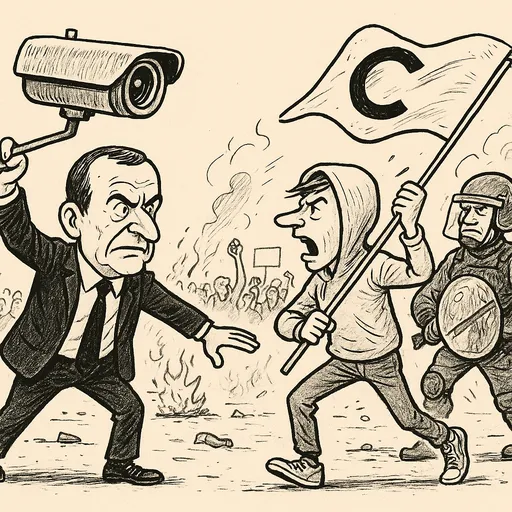
Widespread protests across French cities have turned violent in places, prompting authorities to impose localized curfews, arrest thousands and deploy police and military units to restore order. The government has framed the unrest in security terms, blaming radical groups while also confronting criticism and admissions of lapses in its response. Commentators and analysts trace the unrest to complex social and economic grievances—especially among young people—and note shifting protest demographics tied to revived movements like the Yellow Vests. The disturbances have economic consequences for retailers and public life, and they are reshaping domestic political debates about governance, public order and electoral prospects.
These sources emphasise protesters' grievances, youth mobilisation and a changing composition of movements. Reporting highlights student resilience, Generation Z discontent, revived Yellow Vest activism and the spread of demonstrations across Europe as evidence of deep social and economic frustrations.
This group focuses on concrete security actions: curfews, large police deployments, troop mobilisations and mass arrests as necessary steps to curb violence and protect public order. Reports stress operational decisions, areas affected, and the immediate calming effect of restrictions while documenting the scale of enforcement.
These pieces convey official accusations, political disputes and legal responses that frame the unrest as driven by radical or criminal actors and justify tougher measures. Coverage includes government leaders blaming the far left or radicals, ministerial resignations and calls for stern justice or tighter controls on financing and penalties.
This set interprets the unrest as symptomatic of a wider political and governance crisis with implications for Macron's centrist coalition and for the electoral landscape. Analyses examine how protests interact with markets, public confidence and the rise of order-focused political competitors.
These reports document the economic and everyday consequences of the clashes, from looting and burned cars to heavy losses for retailers and the disruption of ordinary urban life. Coverage highlights financial hits, business warnings and how residents continue routines amid smoke and cleanup.
This small cluster captures local moral and journalistic reactions urging restraint, condemning violence and interrogating causes. Voices include church leaders and commentators calling for peace and reflection on social cohesion.
International coverage links French unrest to policy reactions abroad and diplomatic commentary, with some governments adopting tougher measures or leaders making pointed remarks about security and migration. These stories trace how events in France influence policy debates and rhetoric beyond its borders.