

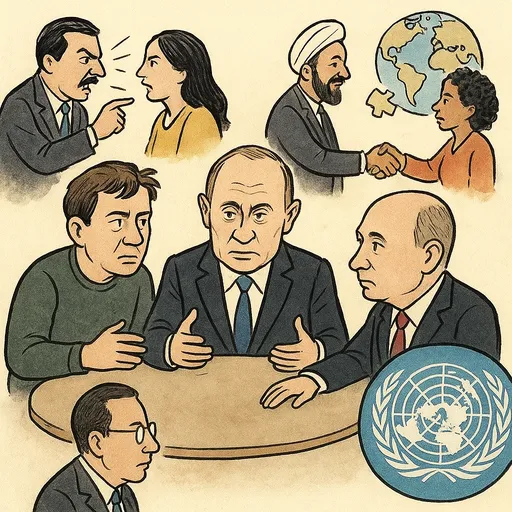
Recent reporting shows a concentrated diplomatic push to revive negotiations over the Russia–Ukraine war, with Moscow signaling readiness for trilateral talks after high‑level envoy meetings and Kyiv expressing conditional openness to ceasefire formats that could freeze front lines. Alongside this, major‑power diplomacy and summit speculation — including proposals for three‑way meetings among leaders — are fuelling debate about the future global order. Regional tensions persist: Latin American disputes and attacks on foreign leaders have strained ties in the Americas, while African, Gulf and Middle Eastern actors press multilayered initiatives on security, mediation and development. At the multilateral level, the contest for UN leadership, China’s outreach to the Global South, and separate peace coordination efforts (notably on Sudan and in Africa) underscore competing visions for diplomacy and international governance.
From the Russian vantage, Moscow is signaling willingness to re‑engage in high‑level and technical negotiations, hosting envoys and proposing formats that could include major power summits. Kremlin statements frame these moves as a pathway back to diplomacy while stressing limits to what Moscow considers acceptable in proposals from Ukraine and the EU.
Ukraine’s leadership is publicly open to practical steps — including proposals to freeze front lines — as a precondition to re‑engage on a diplomatic track, while seeking guarantees that preserve territorial integrity. Kyiv’s statements and meetings with Western envoys reflect willingness to pursue formats that could make negotiations feasible without conceding sovereignty.
U.S. actors are active as mediators and interlocutors, dispatching envoys and pursuing trade and strategic engagement globally. Washington’s openness to meetings and the movements of special envoys underline a continued preference for direct diplomacy and back‑channel engagement on crises.
European institutions and leaders are balancing internal political maneuvering with external diplomatic stances: Paris is sensitive to foreign criticism while Brussels navigates candidate selection and crisis coordination. EU debates encompass how to approach Russia, China and transatlantic coordination alongside domestic political disputes that influence foreign policy.
Several Latin American leaders are entangled in bilateral rows and sharp rhetoric, with diplomatic spats (e.g., Argentina–Brazil, Milei–Spain) straining relations and norms of non‑interference. Concurrently, El Salvador’s leadership is projecting a security‑first approach regionally in response to cross‑border criminal incidents.
Member states and candidates are jockeying for UN leadership while the organization remains central to coordinating responses to global crises. The field includes formal candidacies and concern over election impasses, reflecting competing visions for UN priorities and reform.
Beijing is advancing a narrative of partnership and development, extending invitations, policy propositions and soft‑power initiatives to the Global South. China’s diplomatic push emphasizes economic cooperation and multilateral development frameworks as alternatives to Western offers.
African states and regional organizations are actively engaging in summitry and coordination on security, development and representation, seeking both new partnerships and stronger multilateral mechanisms. Delegations press issues from peacekeeping transitions to translation of continental declarations into concrete action.
Regional actors emphasize de‑escalation and preservation of critical infrastructure while Iran signals conditional openness to talks and pushes back on U.S. approaches. Gulf states and neighbors press for diplomatic solutions even as security concerns shape bilateral and multilateral engagement.
Israel is both defending its policies amid the Gaza crisis and expanding partnerships (including Pacific outreach), while facing diplomatic tensions over surveillance allegations and scrutiny from partners. The combined reporting shows outreach efforts alongside reputational and political challenges.
Commentators and officials are weighing the implications of potential high‑level meetings among the U.S., China and Russia, with observers voicing concerns about shifts in the global order. Rumors of summits feed debate over whether such gatherings would stabilize or upend existing alliances.
The region shows signs of diplomatic strain and increased engagement with European institutions, as bilateral rifts and appeals to the EU highlight contested alignments and human‑rights concerns. Local visits and receptions in Brussels signal growing international scrutiny and involvement.
A range of non‑security exchanges — from education fairs and conservation agreements to digital cooperation and state visits — illustrate the steady, less politicized side of diplomacy that builds networks and capacity. These engagements maintain people‑to‑people ties and foster sectoral cooperation across regions.
International recognition and honors — from Nobel Prizes to state awards — are being used to highlight human‑rights advocacy and diplomatic solidarity, reflecting soft‑power dynamics in international relations. These gestures aim to reinforce norms such as sovereignty and international law.
Romania’s new leadership signals intent to change the tempo and posture of foreign policy, with EU interlocutors urging prompt action on shared priorities. Observers note potential implications for Moldova relations and Romania’s role within EU and NATO debates.
Right‑wing commentators and former advisers are framing provocative narratives about Western politics, foreshadowing potential shifts in policies and alliances. These commentaries influence domestic debates and international perceptions of Western cohesion.