

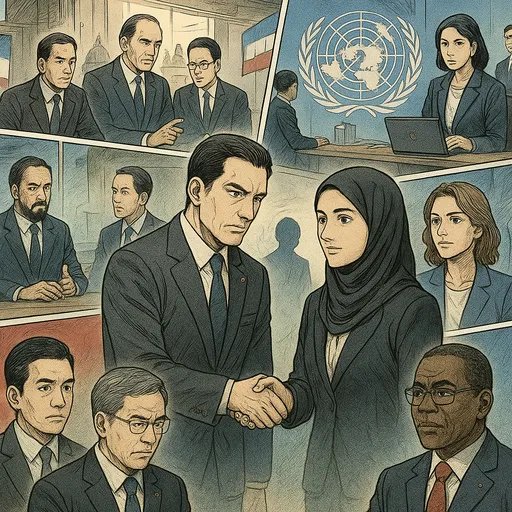
World leaders and envoys have intensified high‑level diplomacy across multiple theatres, with repeated signals that Russia is willing to resume trilateral talks on Ukraine while Western interlocutors press for careful mediation and debriefings. Gulf states and Qatar continue to play an active mediation and partnership role, even as the UAE’s Lana Nusseibeh emerges as a contested frontrunner in the UN secretary‑general race. Regional alignments are shifting: defence pacts and industrial cooperation appear among Turkey, Pakistan, Indonesia and Gulf partners, China deepens ties across the Pacific and Korea border issues drive fresh UN and security responses. Across Africa, Latin America and Central Asia, leaders use summits and bilateral visits to advance development, security and post‑conflict dialogues, while the UN and civil society press for human rights, climate action and protections for civilians and critical infrastructure.
Israel’s president warns that Europe underestimates jihadist threats and applies double standards, arguing this erodes security cooperation. He sees upcoming political shifts as a chance to reset ties with European partners.
Moscow repeatedly states it is prepared to resume trilateral negotiations with the United States and Ukraine, framing such talks as a pathway to a final settlement while reiterating Moscow’s core demands. Several meetings involving Putin and Western envoys or intermediaries have accompanied these declarations and related goodwill gestures.
EU and Western actors are actively weighing mediators, calling for debriefings after US‑Russia talks and pursuing coordinated approaches to restart negotiations. Western officials also discuss security dynamics in regions like the Black Sea while emphasising oversight and allied consultation.
The UAE’s Lana Nusseibeh has emerged as a strong candidate for UN secretary‑general with unified GCC backing, prompting regional diplomatic lobbying. Critics and rights groups, however, warn that concerns about candidates’ human rights records could affect UN credibility.
Qatar and other Gulf states are active mediators on regional security issues such as the Strait of Hormuz and Gaza, while France deepens LNG and defence ties with Gulf partners during presidential visits. These engagements reflect Gulf states’ rising diplomatic profile and pragmatic security cooperation with European powers.
The Holy See frames security challenges through moral and religious lenses, urging protection of nuclear facilities in conflict zones and exploring how faith intersects with global disorder. Vatican diplomacy emphasises humanitarian law, interfaith dialogue and multilateral cooperation.
Turkey, Pakistan, Indonesia and Qatar are coordinating on military production and a defence industry pact, signalling a collective push for regional defence industrialisation and technology transfer. The partnership highlights shifting supply chains and strategic autonomy aims among non‑Western actors.
Indonesia and Australia stress regional resilience and multilateralism while disputes like transboundary haze strain ASEAN talks; meanwhile, Israel and China deepen outreach to Pacific island states as strategic competition shapes partnerships. Smaller states cultivate diverse ties with powers across the Indo‑Pacific to balance development and security needs.
Canadian envoys and leaders, including Mark Carney, are pursuing closer ties with Türkiye as part of a broader effort to diversify partnerships beyond traditional allies. Canada also hosts delegations from other partners, such as Liberia, to negotiate development and education cooperation.
African states are engaged in summit diplomacy, peace and development initiatives while leadership contests and controversies (including UN race developments and historical commemoration disputes) shape regional politics. Governments call for unified action on crises like Sudan and stress regional human rights and peacebuilding imperatives.
Mediated talks between the Venezuelan government and opposition continue with international welcome, and regional tensions between neighbours (e.g., Brazil–Argentina disputes) underscore fragile diplomacy in Latin America. Negotiations focus on political ineligibility, governance and steps toward de‑escalation.
Leaders in the Americas coordinate regionally on transnational organised crime and authorisations of multinational forces for crises like Haiti, reflecting robust security cooperation and US leadership in regional stability efforts. These meetings aim to improve intelligence‑sharing and joint operations.
Moscow and other actors have floated the prospect of a summit among Putin, Xi and Trump, while Beijing publicly distances itself from confirmation, underscoring both interest in high‑level engagement and the sensitivity of great‑power choreography. Commentators debate the summit’s aims and potential impact on Ukraine and other crises.
Pacific and Marshall Islands actors are advancing rights‑based resolutions and calls for UN access to contested regions like West Papua, pressing for international scrutiny and dialogue on human rights. These moves reflect small‑states’ use of multilateral forums to internationalise local grievances.
EU‑related communications and media invitations spark political pushback from some European parliamentarians, reflecting the sensitivities around EU‑Georgia ties and the politicisation of editorial choices. The incident highlights how media decisions can become diplomatic flashpoints.
Microstates and smaller partners (e.g., Liechtenstein, San Marino) pursue strategic and economic partnership dialogues with larger states to deepen trade, security and institutional ties. Such meetings underline the role of targeted diplomacy for niche but important cooperative agendas.
Beijing accuses the EU of a Cold War mentality, framing bilateral differences in security and trade as ideological friction. This rhetoric signals strained China‑Europe relations that complicate multilateral cooperation on global challenges.
Republic of Korea elevates alleged North Korean armistice violations to the UN Security Council while commemorations of the armistice underscore the peninsula’s enduring strategic sensitivities. Seoul seeks multilateral responses to provocations and reinforces historical memory in diplomacy.
Countries and the UN endorse multi‑year sustainable development frameworks and biodiversity programmes (e.g., Laos, Togo, Kyrgyzstan), and the UN issues stark warnings on global warming beyond 1.5°C, prompting calls for accelerated international action. These initiatives tie development finance to environmental commitments.
Syrian officials are engaging bilaterally with Gulf and European counterparts on ties, investment and reconstruction, while condemning regional security incidents; these moves show steps towards diplomatic normalisation and external investment dialogues. Progress remains cautious amid broader regional sensitivities.
Cuban officials frame defence of national sovereignty—particularly regarding the US blockade—as central to their UN strategy and broader diplomatic stance, rejecting external interference and emphasising legal multilateralism. This posture guides Havana’s engagement at the UN and beyond.
Botswana’s alignment with Beijing prompts rebuke from Taiwan and domestic scrutiny over delegation size and diplomatic choices, illustrating the persistent diplomatic tug‑of‑war around China’s sovereignty claims. The row underscores how smaller states navigate great‑power pressures.
Observers question Belarus’s utility as a mediator between Western leaders and Moscow, with US military commentary suggesting Moscow views Minsk pragmatically rather than as a close ally. The debate reflects doubts about Minsk’s leverage in great‑power diplomacy.
Public displays of camaraderie between Chinese and Russian envoys abroad underscore a warming bilateral alignment that sends strategic signals in host capitals. These optics complement deeper cooperation on regional security and diplomacy.
Central Asian governments and the SCO convene to advance regional cooperation on trade, energy and governance while leaders pursue bilateral meetings beyond the bloc. Turkmenistan, Kazakhstan and other states emphasise their constructive roles in regional diplomacy.