

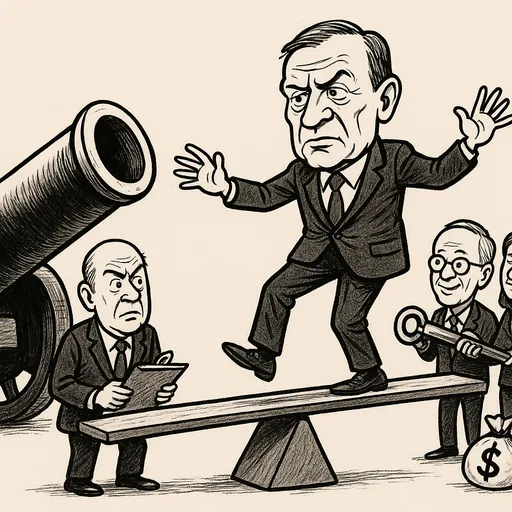
A wide range of bilateral agreements and cooperative initiatives across regions signal an intensification of targeted diplomacy, spanning defense pacts, trade and investment deals, education and technical cooperation, and infrastructure and digital projects. Several partnerships aim to strengthen security ties—through defence memoranda, joint patrols, and capacity-building—while others prioritize economic integration via trade deals, energy and AI investments, and cross-border transport and tourism connectivity. Geopolitical realignments surface in contested maritime accords and increased influence from state actors such as China, Turkey and Gulf partners, provoking regional pushback in some cases. Simultaneously, many smaller states are pursuing practical, people‑focused cooperation in areas like health, education, environmental projects, and customs digitization to boost resilience and development.
The coverage highlights a geopolitical shift in the Comoros where the United Arab Emirates has overtaken Saudi Arabia as the leading Arab investor, driven by discreet diplomatic engagement and targeted funding. The narrative frames the change as part of a larger Indian Ocean realignment reflecting strategic outreach by Gulf actors.
The piece positions Türkiye as actively expanding bilateral trade ties through high-level visits intended to explore trade agreements and investment opportunities. It underscores continuity in Türkiye's efforts to deepen economic relationships without announcing immediate policy shifts.
Laos is portrayed as strengthening practical ties with neighbours through joint security patrols, tourism linkages, academic appointments, and technical cooperation with regional partners. The perspective emphasizes people-to-people exchanges, border security, and capacity-building as pillars of its bilateral diplomacy.
The initiative spotlights Malaysia’s PETRONAS Technology University providing professional development for Turkmen teachers and students, framing the cooperation as knowledge transfer in energy and digital skills. The narrative emphasizes capacity-building to support Turkmenistan’s technical sector development.
Reports present the Turkey–Canada upgrade as a strategic partnership aimed at deeper cooperation across political and economic areas, including trade growth targets and alignment on regional issues. The perspective highlights mutual ambitions to expand commerce and coordinate on security and investment.
London is depicted as negotiating an agreement acceptable to Mauritius, the United States, and the UK, positioning Mauritius as a consequential Indian Ocean partner. The framing stresses diplomatic balancing to secure economic and strategic outcomes acceptable to all sides.
Botswana’s leadership defends closer ties with China as driven by national interest, rejecting external pressure and pointing to potential complementary partnerships, including with the U.S. The stance emphasizes sovereign choice in balancing relations with major powers.
The report focuses on the resumption of cross-border road traffic after strike-related disruption, framing the reopening as essential to regional trade and daily life. Authorities stress restoration of routes and the need for dialogue to prevent future interruptions.
The coverage frames the UK deployment of fighter jets as a defensive support measure for Saudi Arabia, highlighting Britain’s role in Middle East security arrangements. The narrative situates the move within broader defense cooperation and regional strategic considerations.
Kazakh reporting covers defense-related support from Britain and plans to launch a direct Astana–New York air route, reflecting a mix of security cooperation and connectivity ambitions. The perspective underscores Kazakhstan’s interest in both external security ties and expanded international connectivity.
The Marshall Islands is pictured engaging Japan on food security and looking to Seychelles’ tuna management as a model, while receiving Canadian-funded community environmental assistance. The combined view underscores small-island states leveraging bilateral partnerships for sustainable development and resource management.
Japan’s invitation for Peruvian residents to assist with rural revival projects is framed as cultural exchange and demographic policy support. The perspective emphasizes leveraging international ties to preserve endangered communities.
Liberia is seeking to strengthen ties through KOICA alumni-led knowledge transfer, access to Indian media training slots, and diaspora-driven advocacy for direct flights to improve connectivity. The view stresses capacity building and practical transport links to support development and the diaspora.
The article frames U.S. funding tied to a legal settlement as a significant fiscal injection for Curaçao, but with strict oversight and spending conditions. The stance highlights accountability requirements attached to external assistance.
MAS’s Bloom initiative expansion to include Malaysia and Thailand is portrayed as regional financial cooperation to modernize and broaden cross-border payment rails. The perspective underscores multilateral central bank collaboration to facilitate more efficient multi-currency transactions.
Guam’s coverage highlights a new UK–Australia free trade deal affecting tariffs and a MoU to attract Korean visitors, reflecting efforts to boost trade and tourism through bilateral arrangements. The narrative emphasizes economic openings via trade liberalization and targeted tourism partnerships.
Spain’s support for an association agreement is depicted as endorsing deeper integration and recognizing the agreement as an organic evolution of existing ties. The reporting underscores political backing for formalized cooperation frameworks.
Finland’s large aid package for Ukraine is presented as part of Nordic solidarity ahead of winter, reinforcing political and humanitarian support amid conflict. The perspective emphasizes contributions to resilience and security.
Analyses and reports on Turkey’s maritime agreements depict Ankara’s efforts to reshape regional alignments—eliciting both acceptance (Libyan approval) and strong rejection by regional actors. The perspective highlights Turkey’s assertive diplomacy in maritime claims and its polarizing regional impact.
The Malta-sourced report on Libya’s eastern parliament approving Turkey’s maritime borders deal frames the decision as controversial and regionally consequential. The perspective notes the potential effects on maritime claims and diplomatic tensions.
The Dutch political party PRO’s planned information meeting on Bonaire is described as part of metropolitan political engagement with overseas territories. The story frames the event as an opportunity to discuss the islands’ ties to the Netherlands.
Egypt’s stated military support for defending Saudi territory, coupled with assurances against attacking Yemen, presents Cairo as a regional security partner aligned with Gulf states. The perspective underscores Egypt’s defensive posture and regional alignment on stability.
Belarus’ plan to send more potash fertilizer to the U.S. is framed as continuation of trade ties in agricultural inputs. The report emphasizes market and commercial implications for both producers and consumers.
Latvian reporting highlights plans to export dairy, meat, and food-tech to Kazakhstan as part of market diversification strategy. The perspective emphasizes trade opportunities and logistical considerations for entering Kazakh markets.
The Saipem–Egypt MDC offshore drilling cooperation is framed as expanding technical and service partnerships in Egypt’s oil and gas sector. The perspective underscores mutual commercial and technological benefits for energy exploration.
The pieces emphasize longstanding China–Myanmar ties, celebrating mutual respect for sovereignty and economic cooperation, and highlight trade events like the Indonesia Expo to showcase commercial interactions. The perspective stresses continuity and practical trade engagement despite political complexities.
Qatar’s hosting of a defence cooperation memorandum with Türkiye, Pakistan and Indonesia, alongside Macron’s visit, underscores Doha’s role as a diplomatic hub for security and energy discussions. The perspective highlights Qatar’s convening power and strategic partnerships across defense and energy sectors.
Togo’s strengthening of a strategic partnership with Huawei and engagement with Guangdong authorities presents a pragmatic embrace of Chinese investment for digital infrastructure and economic partnerships. The perspective frames Sino-Togolese cooperation as central to national development priorities.
Finland’s expanded satellite cooperation, private-sector plans for a sovereign Ukrainian satellite system, and a major funding package are framed as comprehensive support for Ukraine’s communications and energy resilience. The perspective stresses reducing dependency on inconsistent providers and building sovereign capabilities.
The reported 10.8-fold rise in China–Europe freight rail volumes is presented as evidence of deepening trade integration and improved logistics links across Eurasia. The perspective highlights growing demand and the strategic importance of rail corridors for supply chains.
North Korea’s plan to resume propaganda broadcasts along the border is portrayed as a policy move with limited operational detail but clear signaling intent toward the South. The perspective frames it as a unilateral security and messaging action.
Australian assistance to the Solomon Islands, from AFP equipment donations to tourism MoUs and community project handovers, is depicted as a mix of security, development and people-centered cooperation. The narrative emphasizes Australia’s active role in strengthening local capacities and bilateral ties.
The joint emergency-education initiative between Marche Civil Protection and San Marino is framed as a cross-border model for public safety awareness and preparedness in schools and communities. The perspective underscores practical cooperation in civil protection.
The memorandum signed by Suriname’s Casas and a French counterpart is presented as a step to deepen bilateral cooperation across potential areas like energy and development. The coverage emphasizes strengthening diplomatic and technical links with France.
The policy change ending border controls between Spain and Italy is depicted as facilitating freer movement and trade, reflecting European border management adjustments. The report underscores the practical benefits for cross-border interaction.
The profile of Romania’s new prime minister highlights his background and potential implications for cooperation with Moldova, suggesting continuity or recalibration in bilateral ties. The perspective connects domestic leadership changes to regional diplomacy.
The reporting on planned direct Kishinev–Belgrade flights frames the route as a boost for tourism and connectivity, detailing anticipated launch timelines and ticket pricing considerations. The view positions new air links as drivers of regional mobility.
Guyana’s agreement with the United States on an enhanced defence pact is presented as a deepening of security cooperation with implications for regional stability. The coverage highlights the strategic significance of closer US involvement in Guyana’s defense posture.
South Africa’s Nedbank acquisition of a controlling stake in NCBA is framed as strategic expansion into Rwanda and the broader East African market. The perspective stresses regional consolidation in banking and cross-border investment flows.
The reported £1 billion AI investment between Oman and the UK is presented as a major economic tie aimed at tech cooperation, economic diversification, and strengthening bilateral trade. The perspective emphasizes the strategic and commercial ambitions behind the deal.
The articles frame Cambodia–Japan trade growth as robust, with a joint committee actively working to bolster investor confidence and deepen commercial ties. The view highlights a sustained bilateral economic partnership benefitting both economies.
Reporting on Slovenia’s planned $50 million transfer to Ukraine focuses on donor accountability and concerns over delayed weapons deliveries despite payments. The perspective stresses the complexities and scrutiny surrounding military aid to conflict zones.
The U.S.-funded Tonga fuel study is described as technical assistance to inform energy planning and renewable targets, with questions raised about policy trade-offs. The narrative highlights donor-supported analysis guiding national energy strategy.
The Algeria–Niger memorandum is reported as a formal step to enhance cooperation on security and regional ties, reflecting mutual interest in stabilizing shared border and strategic issues. The perspective emphasizes diplomatic coordination for regional stability.
Reports show Turkish SIBA Hydropower opening a local branch and other foreign firms exploring Kyrgyz projects, framing Turkey as expanding its energy and engineering footprint. The perspective highlights private-sector-led strengthening of bilateral economic ties.
Mauritanian officials and private sector representatives are seeking stronger economic ties with Ghana while separately engaging the EU to improve bilateral fisheries negotiations. The perspective underscores proactive outreach to diversify partnerships and formalize resource governance.
The piece examines obstacles hindering major U.S. arms sales to Taiwan, framing the delays as politically and strategically complex and influential for Taiwan’s defense posture. The perspective points to geopolitical and domestic factors constraining arms transfers.
Russian reporting describes near-finalization of three MoUs and an eight-sector cooperation framework with Togo, emphasizing a comprehensive expansion of trade, energy and technological ties. The perspective frames the agreements as strengthening Russo‑Togolese state-level cooperation.
Belarus and Russia’s agreement on next year’s Shield of the Union exercises and air-defense coordination is presented as continued military integration between the two states. The perspective emphasizes synchronous defense planning within allied frameworks.
Guinea-Bissau’s coordination of its foreign community in Burkina Faso is depicted as an effort to manage diaspora affairs and protect nationals abroad. The view highlights bilateral consular and community engagement priorities.
Saint Lucia’s participation at Taiwan’s national day reception is framed as a reaffirmation of the bilateral friendship and ongoing diplomatic engagement. The perspective emphasizes ceremonial diplomacy underpinning sustained relations.
Egyptian reporting stresses dramatic growth in chemical exports to China, coordination with shipping lines over Suez transits, and firm rejection of Libya’s ratified maritime deal with Turkey. The perspective combines economic success with active regional diplomatic stances on maritime law and security.
The Faroe Islands’ agreement with China to improve market access is framed as a targeted effort to open Chinese markets for Faroese exporters and reduce trade barriers. The narrative highlights the economic benefits for a small open economy.
Official audiences with French diplomats and executives reflect Equatorial Guinea’s push to expand cooperation in defense, energy and development with France. The perspective underscores a mutual intent to intensify practical and strategic partnerships.
EU announcements on a new Arctic Strategy and a Greenland exploration license signed with an Australian firm are framed as steps to bolster scientific, governance and economic engagement in the Arctic. The perspective emphasizes multilateral and commercial approaches to Arctic development.
The Japan–Malaysia counter-drone system deal is presented as a bilateral effort to address emerging aerial threats and strengthen security ties in the region. The view highlights technology-sharing and defense collaboration against evolving risks.
The European Council President’s remarks describe Vietnam as an important Indo-Pacific partner, signaling deepening political trust and cooperation across security and economic domains. The perspective reflects the EU’s strategic outreach to Vietnam.
Hungary’s decision to allow Ukraine to proceed on two topics in EU accession talks is portrayed as a gatekeeping but cooperative move that affects the broader negotiation process. The perspective underscores bilateral leverage within multilateral accession dynamics.
Kuwaiti reporting on the Canada–Turkey strategic partnership highlights the upgrade announced during Carney’s visit, presenting it as a notable diplomatic development with regional security implications. The perspective reinforces the significance of the agreement beyond the immediate parties.
Coverage of Saudi investment conference frames Riyadh’s outreach as pivotal to attracting foreign investment and shaping regional economic policy. The perspective stresses Saudi Arabia’s role in regional capital flows and investment agendas.
The reporting depicts U.S. mediation to permit religious processions under surveillance as an intervention that brokered limited concessions while raising civil society concerns. The perspective emphasizes the political and social trade-offs in mediated agreements with the Nicaraguan government.
The Australia–East Timor defence deal enhancing cyber and maritime security is presented as Canberra reinforcing ties with a neighbor to counter broader regional influence. The perspective highlights capacity-building and a strategic bilateral security alignment.
The Colombian reporting on ambassadorial appointments underscores government diplomatic prioritization toward Venezuela and Panama through named envoys. The perspective situates postings as reflections of foreign policy focus and regional engagement.
Tajikistan’s increasing travel links with Uzbekistan, customs digitization cooperation with South Korea, and energy discussions with China are presented as multi‑vector efforts to modernize infrastructure, trade facilitation and energy partnerships. The perspective highlights pragmatic bilateral engagements to boost connectivity and economic modernization.
Beninese reporting references Russia and Togo preparing multiple agreements as part of a broader push to institutionalize multi-sector cooperation. The perspective emphasizes regional awareness of expanding Russo‑African ties.