

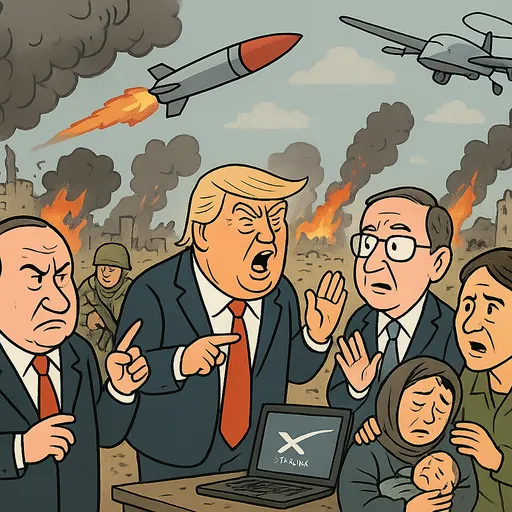
Coverage shows heavy fighting and renewed missile and drone strikes across Ukraine even as diplomatic activity intensifies, producing a striking gap between battlefield violence and statements about talks. Russian leaders publicly say they are open to negotiations but insist any settlement must include security guarantees and reflect Moscow’s territorial claims. Ukrainian officials and allies condemn the attacks, stress civilian suffering and resilience, and debate practical trade-offs while warning that Russia’s posture has not changed. Parallel disputes over Starlink and other private-sector communications underscore how technology and political claims (notably from U.S. President Trump) have become part of the wartime diplomacy narrative. European and NATO-focused commentators emphasize broader regional security implications and contingency planning, while reporting on foreign fighters, Wagner-linked continuity and disinformation points to wider geopolitical consequences.
Official Russian statements emphasize readiness to negotiate a final settlement but set strong preconditions, including security guarantees and assertions about historic claims to eastern Ukraine. Moscow frames negotiations as requiring broader changes to the European security framework and rejects short-term truces as sufficient.
Ukrainian leaders and allied sources stress that Russian attacks continue unabated, highlight civilian suffering and affirm that Moscow’s attitude has not meaningfully shifted. Kyiv voices openness to diplomacy in some forms but prioritizes defence, humanitarian protections and accountability while communicating the costs of occupation and bombardment.
Several pieces reflect claims by U.S. President Donald Trump and allies that Starlink access was restored and that he could influence negotiations, producing contested public narratives about critical battlefield communications. These articles show the political salience of private tech platforms and how competing statements (from politicians and companies) shape perceptions of Ukraine’s operational resilience.
Multiple reports document fresh missile, drone and artillery strikes across Kyiv and other regions, often timed around diplomatic contacts, underscoring the fragility of any ceasefire prospects. Coverage focuses on casualties, damage to infrastructure and the scale of aerial campaigns, stressing that violence persists despite talks.
European governments, parliaments and analysts concentrate on the wider security architecture, contingency planning and alliance posture—considering naval options in the Black Sea, NATO deployments, and difficult trade-offs over territory and NATO accession. Commentators are sceptical of quick fixes and debate realistic pathways to a settlement that preserve European stability.
Third‑party states and regional media largely report developments while urging restraint and monitoring diplomatic initiatives, noting trilateral or envoy-level contacts and the uncertain prospects for progress. These pieces emphasize observation, mediation potential and the regional diplomatic choreography around talks.
Reports highlight persistent non-state and transnational elements tied to the conflict—Wagner-linked networks, foreign fighters, repatriations and Kremlin-aligned media influencing narratives abroad. Coverage signals how these actors extend the war’s political and informational footprint beyond the battlefield.