

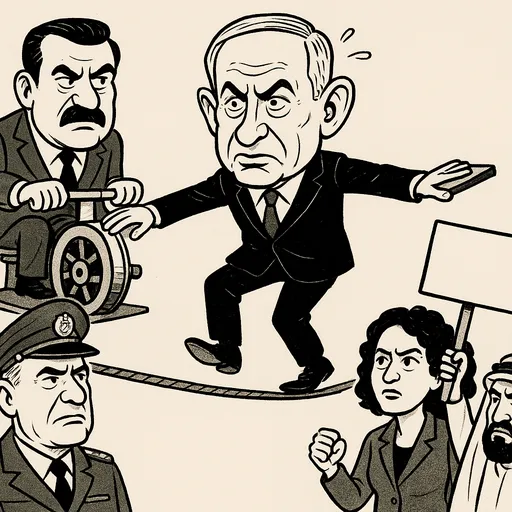
Israel's elections have highlighted a highly fragmented political landscape in which winning the most seats does not guarantee the ability to form a government. Several pieces profile viable challengers—particularly former military chiefs and a united opposition—who could displace Benjamin Netanyahu but lack an obvious governing majority. Commentators warn that Netanyahu's right‑wing, religious allies have shifted the political mood and could erode democratic norms while raising regional tensions, even as Arab voter mobilization and tactical opposition choices add unpredictability. External actors and endorsements add pressure but are unlikely to overcome the complex post‑vote bargaining that experts expect to prolong political paralysis.
Several outlets profile potential anti‑Netanyahu figures, notably former chiefs of staff and other new contenders who present security‑focused alternatives to Netanyahu. These pieces stress personal background and electability but note uncertainty about whether challengers can build durable coalitions.
Multiple reports emphasize that no bloc appears poised to win a Knesset majority, making coalition formation highly complex and negotiations protracted. Analysts argue that even parties with strong seat shares will struggle to translate electoral gains into a stable governing alliance.
Commentators and former leaders warn that Netanyahu's alliances with ultra‑nationalist and ultra‑religious partners risk eroding democratic norms and provoking domestic and regional instability. These pieces frame the election as not only a power contest but a test of Israel's political character.
Some coverage highlights efforts by a united opposition to defeat Netanyahu through tactical coordination and political maneuvering. These reports focus on strategic alliance‑building aimed at assembling an alternative governing bloc despite fragmentation.
Analysis from regional sources stresses that Arab voter turnout could decisively shape seat distributions and coalition math, while noting reluctance among some opposition factions to formally align with Arab parties. The perspective underscores both the electoral power of Arab citizens and the political sensitivities that complicate coalition deals.
Coverage points to high‑profile external endorsements, notably from U.S. figures, as factors that can influence public debate and campaign dynamics. Observers caution that foreign backing affects perceptions of legitimacy and may complicate Israel's domestic political discourse.