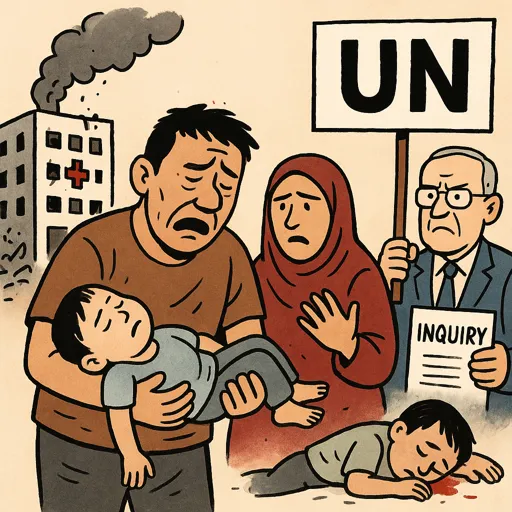
Reporting documents a heavy civilian toll in Gaza, with repeated strikes on hospitals killing patients, medical staff and children while undermining essential health services. UN officials and regional figures are urging unfettered humanitarian access as blockades, damaged logistics, heavy rains and the approaching winter exacerbate shelter and medical shortages. A UN inquiry and some sources allege deliberate targeting of children and record extremely high casualty figures, prompting calls for investigations and accountability. Ongoing clashes on the ground continue to produce casualties and hinder relief efforts.
Multiple reports document airstrikes on Nasser and other Gaza hospitals that killed patients and medical staff, including doctors and children, and forced hospitals to suspend services. Coverage highlights the immediate humanitarian impact, disputed claims about militant use of medical facilities, and international alarm over attacks on healthcare.
Several pieces report days with double-digit fatalities across Gaza and cite a very high cumulative casualty toll, underscoring the scale of civilian suffering. A UN inquiry alleging deliberate targeting of Palestinian children raises potential war crimes and crimes against humanity concerns and fuels international demands for accountability.
UN and regional actors call for opening crossings and removing impediments to relief as blockades, flooding and heavy rains imperil tents, supplies and deliveries. Reports of children and infants dying from cold or hypothermia highlight the acute vulnerability of displaced families as winter approaches and aid remains constrained.
Local militant statements describe ongoing engagements with pro-Israeli forces around central Gaza, indicating that frontline fighting persists amid the humanitarian emergency. These clashes contribute to the pattern of civilian harm and complicate relief operations.