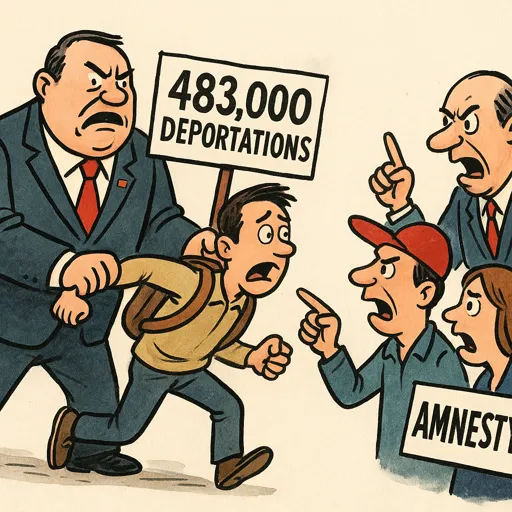
Recent reporting centers on record deportation figures that have become central ammunition in partisan U.S. immigration debates. Administration claims about more than 483,000 removals and contrasting narratives about policy goals feed divisions within conservative circles and broader debates over amnesty and enforcement. At the same time, policy moves—from housing assistance limits to visa processing suspensions—and high-profile enforcement cases underscore both the practical effects and political stakes of immigration enforcement. Regional responses, notably Mexico’s rebuttals about migrant caravans, further shape the bilateral and rhetorical context.
Officials and supporters highlight unprecedented deportation totals to portray a tougher stance, while critics argue the numbers are being politicized and used as campaign ammunition. Internal Republican tensions, including hints at amnesty versus calls for corrective enforcement, reveal disputes over the movement’s future direction.
Cross-agency enforcement episodes and new limits on housing assistance for families with undocumented members are presented by proponents as public-safety and deterrence measures. Critics counter that these steps harm vulnerable families, deepen partisan conflict, and raise legal and humanitarian concerns.
A temporary hold on immigrant visa applications and legislative moves on Temporary Protected Status show administrative and congressional levers being used to manage migration and protections. Both developments have immediate effects on families and could become focal points in broader immigration negotiations.
Mexican President Claudia Sheinbaum publicly disputed claims that migrant caravans have reached the U.S. border, directly challenging political narratives used in U.S. debates. Those rebuttals complicate bilateral messaging and influence how migration flows are portrayed domestically.