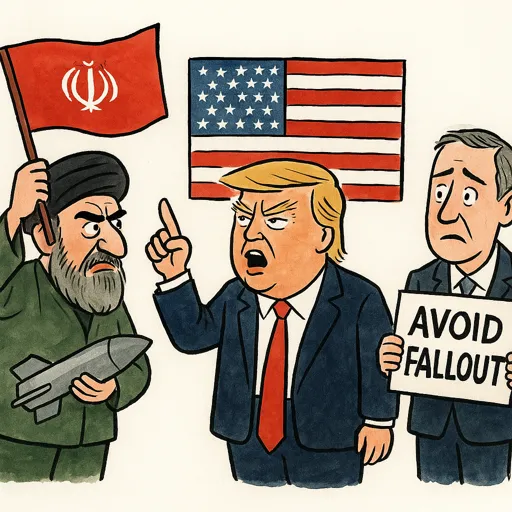
Iran’s rhetoric and claimed operations against U.S. forces and partners have grown more confrontational, with Tehran warning of strikes on bases and asserting attacks on regional targets. The Iranian leadership combines displays of military readiness and rebuilding of arsenals with occasional cancellations of tests under diplomatic pressure. U.S. domestic politics — including hardline voices and former President Trump’s statements — intensify the diplomatic climate, even as some U.S. officials and allies urge restraint. International appeals stress avoiding humanitarian fallout, notably by keeping fertilizer shipments flowing through the Strait of Hormuz.
Tehran and the Islamic Revolutionary Guard Corps have publicly threatened and claimed strikes on U.S. assets and allied facilities, signaling a willingness to expand the battlefield if Western forces are involved. These allegations — including downed drones, claimed destruction of radar sites and drone attacks in Bahrain — heighten regional alarm while verification remains contested.
Allied intelligence warnings have flagged a possible Iranian-planned drone attack targeting former President Trump and senior White House officials, prompting close U.S.-Israel coordination. Such alerts underline the perceived direct threat to U.S. leadership and raise the stakes of the confrontation.
Prominent U.S. political figures and commentators argue for a tough posture toward Tehran, with former President Trump and allies asserting the U.S. does not need a deal and emphasizing confrontation over negotiation. Internal personnel moves and public defenses of a hardline approach contribute to a domestic environment that can limit diplomatic flexibility.
Iran is both demonstrating military posture at home and maintaining a sizable missile inventory, while also signaling continued efforts to rebuild its arsenal. Public drills and symbolic displays are used to bolster domestic morale and project strength abroad, even as some tests are postponed amid external pressures.
Regional diplomacy is fragmented: leaders and analysts describe opaque Iranian strategy while allies and commands publicly dispute reports of preparations for wider war. Political maneuvers — including attempts to block or shape deals — and officials facing domestic pressures contribute to strategic uncertainty.
International officials have urged Washington and Tehran to permit fertilizer shipments through the Strait of Hormuz to prevent global agricultural disruptions, framing transit as a humanitarian priority. Iran’s accusations of economic coercion and threats of deprivation for civilians underscore the humanitarian dimension of the confrontation.