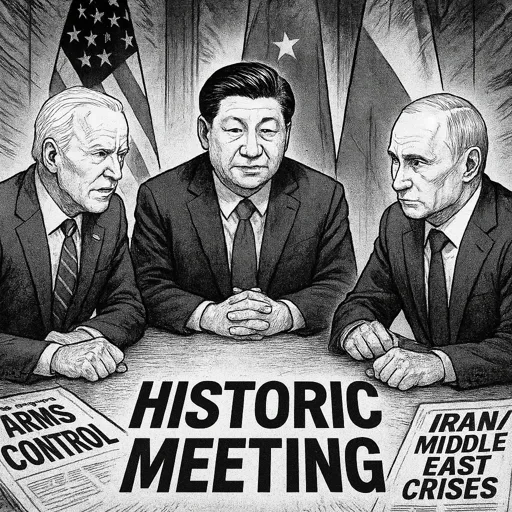
A wide range of international outlets report and frame an unprecedented trilateral meeting in China among leaders of the United States, China and Russia as historic and high-stakes. Coverage emphasizes negotiations over arms control, the Iran/Middle East crises, and bilateral trade and technology disputes that could shape outcomes. Regional governments and civil society voices warned against closed-door grand bargains—evoking fears of a “second Yalta”—and urged transparency and care to avoid destabilizing concessions. With agendas only partially disclosed and key issues like Ukraine reportedly excluded, analysts see both opportunity for crisis management and risk of shifting alliances without clear accountability.
Numerous reports and official statements present the meeting as an unprecedented, high‑level trilateral summit, often calling it historic and noting its setting in China or alongside APEC. These pieces stress the meeting’s potential significance for global security and diplomacy while noting limited public detail on timings or concrete outcomes.
Several articles foreground the probable agenda items—chiefly Iran and broader Middle East issues, alongside bilateral trade and technology disputes—while noting some topics, like Ukraine, may be off the table. Coverage highlights how trade truce proposals and high‑profile tech cases (e.g., Nvidia and tariffs) could condition what is achievable in talks between the U.S. and China.
South Korean voices and analysts warn against the summit becoming a culpatory ‘second Yalta,’ urging transparency and balanced diplomacy to protect regional stability. Civil society groups and other regional actors raise parallel concerns—calling for AI treaties, highlighting human‑rights implications, and noting diplomatic gestures such as China returning remains as symbolic steps amid fraught relations.