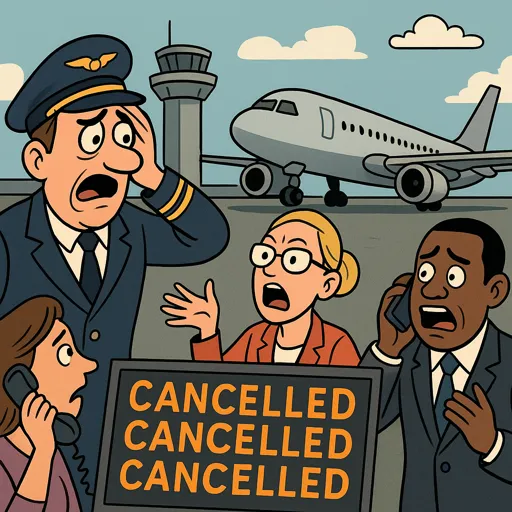
A nationwide suspension of takeoffs in the United States, lasting roughly four hours in many places, triggered mass cancellations and delays as airlines and airports struggled to recover. Reporting links range from a cable swap during a copper-to-fiber wiring upgrade to a broader communications or air-traffic-control system fault, while officials say there is no evidence of cyberattack or terrorism. Authorities lifted the ground stop and flights gradually resumed, but backlogs mean disruptions and warning of further cancellations persisted into the weekend. The episode has prompted renewed calls for major FAA modernization funding and highlighted the fragility of critical aviation infrastructure and the wide human and international impacts of such outages.
Multiple reports attribute the ground stop to maintenance work replacing old copper wiring with fiber or a cable swap that triggered the outage. Coverage includes administration statements identifying repair or upgrade activity as the proximate cause and highlights operational consequences for airports and carriers.
Several outlets frame the incident as a communications or air-traffic-control system fault that suspended takeoffs and produced widespread knock-on effects. Reporting emphasizes the technical nature of the failure, the scale of cancellations and delays, and ongoing investigations into system resilience and contractor readiness.
Many stories focus on the human and operational toll: thousands of flights canceled or delayed, stranded and sleeping passengers, and major disruptions to travel plans. Reports quantify the scale (roughly 5,000–6,000 cancellations in several accounts, with some outlets citing larger tallies) and document international ripple effects.
Officials repeatedly rejected cyberattack or terrorist explanations while pointing to an aging ATC and communications infrastructure and contractor issues as likely contributors. Coverage highlights government warnings of continued cancellations, calls for large appropriations to modernize systems, and official updates as investigations continue.
Reports note that the FAA lifted the nationwide ground stop and flights resumed, but emphasize that backlogs and coordination challenges will prolong delays and cancellations. Articles track phased recovery efforts, agency briefings, and advisories urging travelers to monitor flight status.
A subset of pieces situates the outage amid broader political developments—government shutdown effects and personnel moves—and offers personal-angle coverage, such as individuals caught up in the disruption. These accounts underline collateral consequences beyond airport operations.