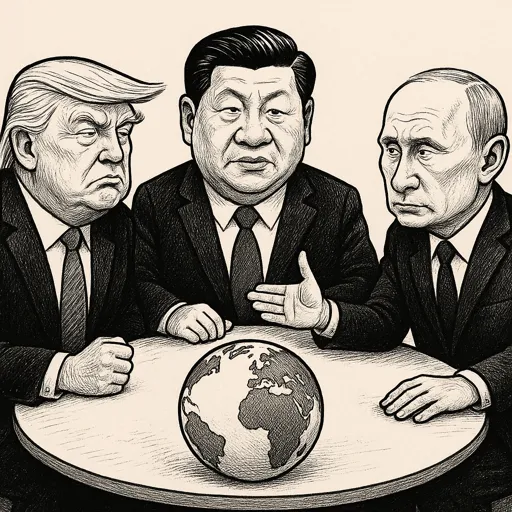
Leaders of the United States, China and Russia — Donald Trump, Xi Jinping and Vladimir Putin — are set to meet in a rare trilateral summit in Shenzhen on November 19, with confirmations from Beijing, the White House and Moscow. Public reports highlight the historic nature of the encounter while noting that the agenda remains unsettled; expected topics include Iran, nuclear issues, trade, regional security and emerging technologies such as AI. Analysts warn the talks could reshape great‑power alignments or further destabilize international security if coordination or miscalculation occurs. The summit marks an intensified phase of high‑level diplomacy that has drawn scrutiny and varying interpretations across global media.
Multiple state sources and the White House have publicly confirmed the meeting and its timing, framing it as a historic three‑way encounter; reporting focuses on location and schedule more than specifics. Coverage collects official statements from Beijing, Moscow and Washington while leaving substantive agenda details largely unspecified.
Several outlets emphasize that expected discussions will center on Iran and possible nuclear‑related issues, alongside trade, regional security and technology topics such as AI. These reports frame the summit as a potential forum for policy coordination on the Iran war and other strategic matters between the three powers.
Commentary stresses the unprecedented nature of the summit and its potential to alter geopolitical alignments, while also highlighting doubts — Xi’s caution about hosting, a reportedly unset agenda and European alarm over a closer China–Russia axis. Analysts warn the meeting could either open diplomatic avenues or heighten risks to international stability depending on outcomes and follow‑through.