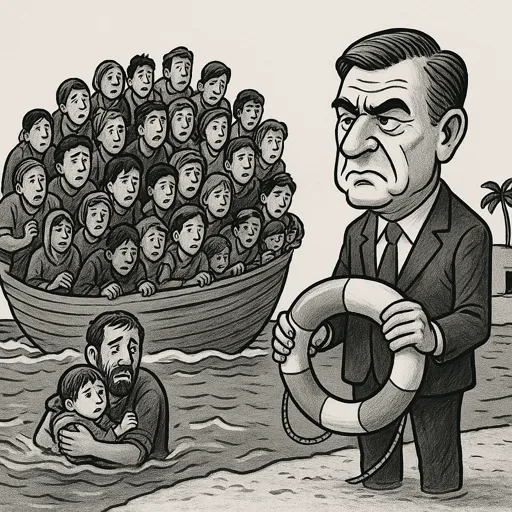
The Canary Islands have seen repeated large migrant arrivals in recent days, with multiple reports of record single-day and multi-day landings reaching roughly 1,500–2,200 people and contributing to more than 28,000 sea entries into Spain in under a year. The sudden surges have strained local reception facilities and prompted large-scale rescue operations, with many vulnerable people — including women and minors — among those brought ashore. Humanitarian groups warn about dangerous sea conditions and capacity shortfalls as islands that depend on tourism face logistic pressures. The influx is also fuelling national political debate over migration controls during an election campaign and raising questions about Spain’s and the EU’s ability to manage Atlantic migration routes.
Multiple outlets report sharp spikes and record crossings to the Canary Islands, documenting single-day landings of roughly 1,500–1,580 and two-day totals around 2,000–2,200, while national tallies exceed 28,000 sea arrivals in under a year. The coverage emphasizes the scale and pace of arrivals along the Atlantic route from Africa and frames them as part of broader European migration pressure.
Other reports highlight the humanitarian and political consequences: extensive rescue operations saved hundreds to thousands, many of whom are women and children, while local reception systems are stretched and tourist economies feel the strain. The influx is feeding contentious debates over migration policy during Spain’s campaign season and prompting calls for better coordination at national and EU levels.