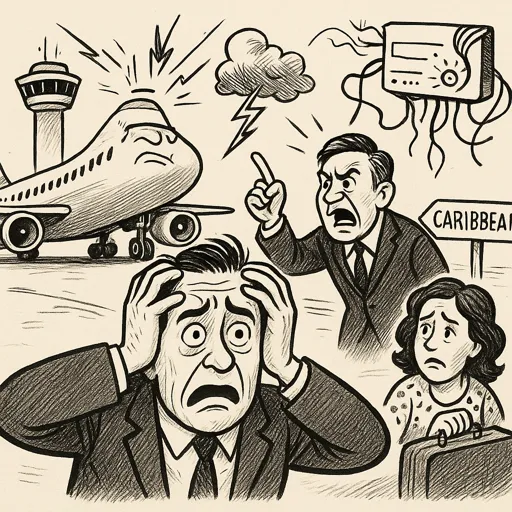
Major disruptions shut down U.S. airspace and grounded thousands of flights after a cascade of technical failures tied to maintenance work and aging infrastructure. Investigations have centered on router and fiber-optic upgrades, overloaded legacy network equipment and repeated airline IT outages, notably at United Airlines. The stoppages produced widespread cancellations and stranded travelers, with particular concerns for Caribbean tourism and regional connectivity. Political debate and renewed calls for FAA modernization have intensified as authorities and carriers work to restore services and prevent recurrence.
Multiple reports highlight recurrent IT failures at United Airlines that disrupted check-in, departures and left aircraft stranded on the ground. United says it restored systems and is investigating causes while regulators and industry observers question airline IT resilience.
Coverage emphasizes faults in national air-traffic infrastructure — from router installations and fiber-optic upgrades to overloaded legacy network equipment — that prompted rare nationwide halts. Regulators have launched probes and ordered temporary stops while officials work to diagnose and repair network faults, underscoring urgency around modernization.
Reporting focuses on the human and regional toll: thousands of cancellations, stranded travelers and economic exposure for tourism-dependent areas. Airlines and airports began a gradual recovery over several days, but sources warn that fully restoring schedules and rebooking passengers will take time.
Political actors framed the disruptions as evidence of failing infrastructure, with partisan blame and public demands for accountability and investment. Officials and lawmakers have debated large-scale FAA funding and oversight even as some agency leaders resist or deflect calls for apology.