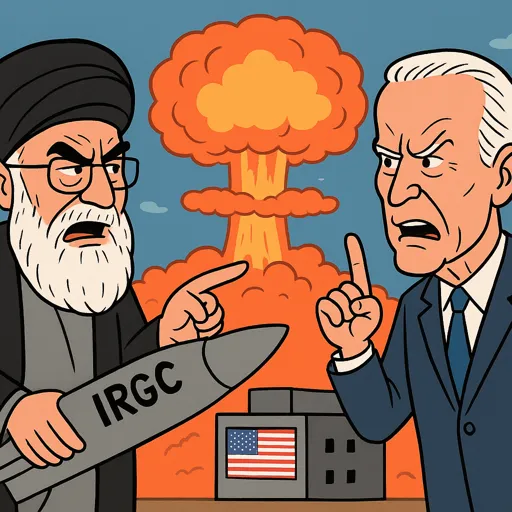
Public hostility from Tehran toward U.S. leadership is manifest in repeated IRGC claims of strikes on American facilities in the Gulf, accompanied by intelligence reports alleging plots against the U.S. homeland. Washington has publicly condemned attacks, warned of consequences, and signaled it will avoid a prolonged war even as allies assess the risks. Competing denials and unverified claims complicate the information environment and raise the possibility of wider escalation affecting U.S. bases in Europe and transatlantic ties. The mix of kinetic threats, alleged plots, and diplomatic messaging underscores high stakes and persistent instability in U.S.–Iran relations.
Iran’s Islamic Revolutionary Guard Corps has publicly claimed multiple drone strikes and attacks on U.S. radar sites and military installations in Bahrain and the Strait of Hormuz, signaling an assertive posture in the Gulf. Independent verification is limited, but the repeated assertions increase pressure on U.S. forces and regional partners and heighten the risk of miscalculation.
Multiple intelligence reports and media outlets have alleged that Iran has considered or planned attacks against targets in Washington, D.C., including claims about potential use of unconventional means; U.S. officials have publicly questioned the credibility of some threats. These allegations focus attention on homeland risk and have driven heightened monitoring and protective measures for U.S. officials and facilities.
U.S. political leaders and policy voices debate responses, with some urging restraint to avoid a protracted conflict while others emphasize pressure and accountability; analysts warn a war with Iran could reshape U.S.–Europe relations. Concerns about policy blind spots and alliance cohesion underscore the diplomatic stakes as Washington coordinates with partners.
Washington has condemned Iranian attacks and reiterated commitments to Gulf security, while Tehran has publicly threatened to target U.S. bases in Europe if involved and simultaneously denied certain domestic incidents, producing competing narratives. The mix of condemnations, explicit threats, and denials reflects an intense information battle that complicates verification and crisis management.