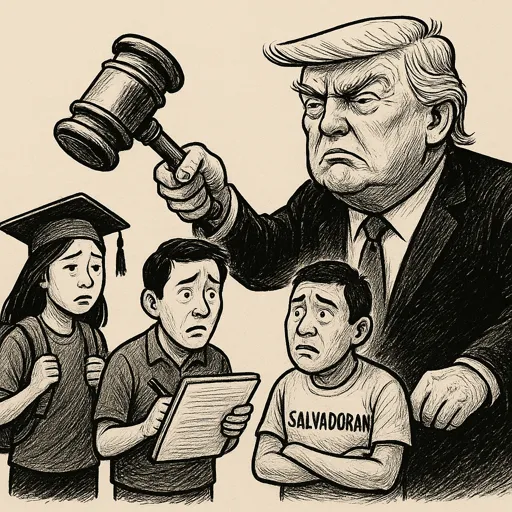
U.S. federal courts have repeatedly blocked Trump-era rules that would shorten allowable stays for foreign students and journalists, finding the changes arbitrary or unlawful and halting their implementation. The rulings preserve existing visa durations for students and press members but leave policy in legal limbo as the administration signals appeals. The legal setbacks coincide with falling international student enrollment and growing hardship for vulnerable communities, such as Salvadorans facing TPS uncertainty. Simultaneously, proposed employment-based green card changes and research on skilled immigration’s wage effects are intensifying political and economic debates about the future of U.S. immigration policy.
Multiple federal courts have determined that the administration’s plan to shorten stays for foreign students and journalists was arbitrary or inadequately justified, temporarily blocking the rules from taking effect. Those decisions protect current visa durations while creating continued legal uncertainty as the administration considers appeals.
Visa restrictions and regulatory uncertainty are associated with declines in international student enrollment, threatening campus diversity and university finances. Fewer incoming students reflect growing hesitancy to pursue U.S. study amid shifting visa policies.
The administration’s proposed new requirements for employment‑based green cards and studies showing skilled immigration’s effects on wages are sharpening debates over labor market impacts and immigration priorities. Policymakers must weigh employer needs against concerns about competition and wage dynamics when designing reforms.
Uncertainty around Temporary Protected Status is producing immediate social and economic harms for Salvadoran communities in the U.S., including job losses and problems accessing driving licenses. The situation highlights how shifts in immigration policy or legal interpretations can disrupt everyday life for protected populations.
Beyond individual rules, observers note that immigration outcomes reflect a mix of executive initiatives, judicial review, congressional action, and advocacy pressure rather than only presidential rhetoric. That balance of power will determine how legal setbacks and new proposals shape long‑term policy.