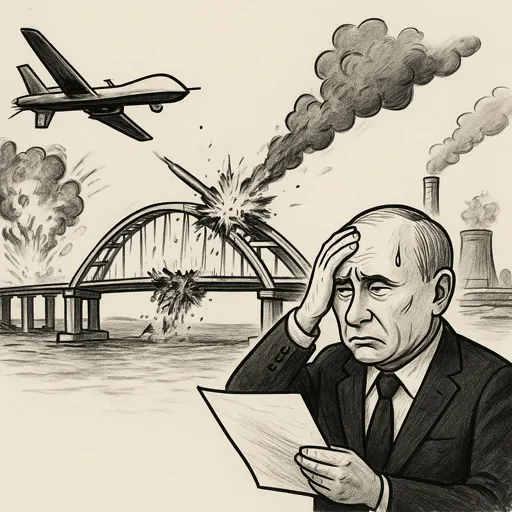
Attacks and counterattacks have focused intensely on strategic transport links, above all the Kerch/Crimean bridge, where Ukrainian strikes have damaged or partially collapsed key spans and halted traffic. Kyiv’s operations—often framed as long-planned and using domestic weapons—signal an increased ability to strike deep into occupied or Russian-held areas, while Moscow has responded with emergency briefings and vows to rebuild. Beyond the bridge, drone and missile strikes have struck energy and transport nodes inside Russia and Ukraine, raising fears of broader escalation and civilian harm. International reactions range from political fallout and public commentary to concern about escalation and the diplomatic implications ahead of major summits.
Multiple outlets report that Ukrainian missiles and drones struck the Kerch/Crimean bridge, damaging road arches, halting traffic and showing footage of concrete collapsing into the sea. Coverage emphasizes the bridge’s strategic and symbolic importance for Moscow, Kyiv’s planning and strike capability, and continuing uncertainty over the full extent and military consequences of the damage.
Analyses and live updates highlight political fallout and official responses: concerns that a successful strike complicates Putin’s domestic standing and international diplomacy, US criticism of Ukrainian strikes, and Russian briefings and emergency meetings. Reporting also captures allied commentary and Kyiv leadership messaging praising domestic weapons development amid the tensions.
Several reports document Ukrainian drone and missile attacks on Russian territory, focusing on oil distribution hubs and refineries that supply Moscow and the wider region. These pieces underline a deliberate effort to degrade energy and logistic nodes inside Russia and the attendant risk of escalation from deeper strikes.
Coverage stresses that both sides are targeting the same strategic weak points—bridges and transport corridors—disrupting supply lines and civilian movement across Crimea and within Ukraine. Reporting mixes frontline accounts, civilian harm and resilience, and analysis of how infrastructure warfare reshapes tactical options and regional security calculations.
General roundups and follow‑up pieces place the strikes in ongoing international coverage while some reports note reconstruction efforts and official promises to strengthen damaged spans. These items reflect continuing uncertainty over the long‑term effects on logistics, narrative control, and the contest over strategic infrastructure.