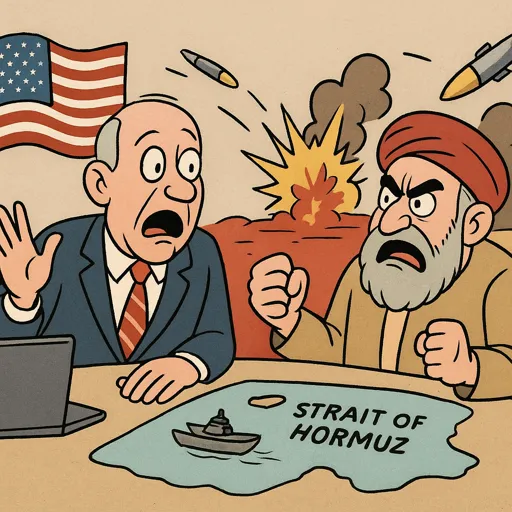
U.S. forces have carried out multiple strikes on Iranian-held islands and missile sites in the Strait of Hormuz region, with Washington framing some actions as self‑defence amid a flurry of reported retaliatory incidents. Regional governments and markets are on heightened alert as the strikes and accusations of Iranian attacks on Gulf facilities raise fears of wider escalation. U.S. intelligence and policymakers describe an elevated threat environment — from suspected plots and unusual outages to potential Iranian operations — while domestic political debate and oversight intensify. The situation remains volatile, with limited public detail on casualties and officials signalling both restraint and readiness for further action.
Multiple outlets report U.S. airstrikes hitting targets on Qeshm, Kish and other locations in the Strait of Hormuz and Persian Gulf, often described by U.S. sources as responses to missile or drone threats. Coverage focuses on the strikes themselves and their immediate implications for regional security, with few confirmed casualty details and continued uncertainty about escalation dynamics.
Gulf states and regional actors have been placed on high alert as strikes on Iranian islands ripple across security and energy concerns, prompting diplomatic monitoring and contingency planning. Analysts also highlight how infrastructure — such as dams and other strategic sites — factors into target selection and the broader calculus of any campaign.
Reports link the U.S. strikes to a wider pattern of alleged Iranian actions — including strikes on bases in Bahrain and Kuwait, attacks on U.S. radar and maritime incidents — and U.S. intelligence warnings about possible Iranian plans. These claims, along with accounts of digital outages and reciprocal strikes, are used to justify heightened U.S. deployments and defensive measures in the region.
Domestic U.S. signals range from presidential threats and strategic caution to congressional scrutiny and precautionary evacuations, reflecting internal debate over whether to escalate or hold back. Officials face intense questioning even as leaders publicly warn Iran of severe consequences for attacks on U.S. interests.