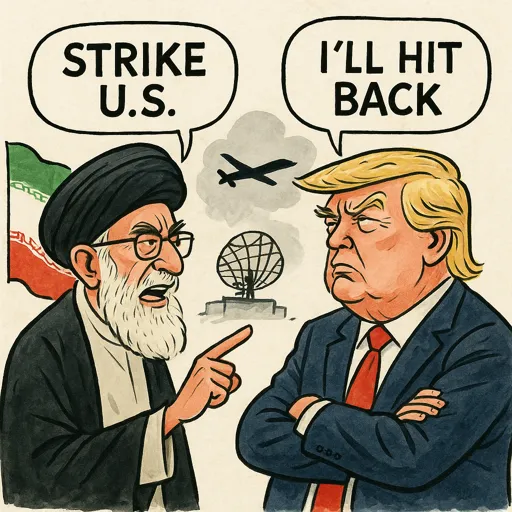
Iran has publicly escalated rhetoric and claims of strikes against U.S. assets in the Gulf, including assertions of downed drones and damaged radar installations, while also threatening American bases and allies. U.S. leaders have answered with a mix of firm warnings — notably repeated threats from former President Trump — and restrained military messaging, including denials from CENTCOM and calls to avoid a prolonged conflict. Iranian authorities simultaneously dismiss Western reporting and deny certain allegations, shaping a confrontational public narrative. International figures and regional voices warn of wider fallout and stress human-rights concerns amid the rising brinkmanship.
Iranian authorities and state-aligned outlets have repeatedly claimed they struck or targeted U.S. assets in Bahrain, Kuwait and the Gulf, and threatened U.S. bases in Europe, Washington and Tel Aviv. Tehran has also pushed counter-narratives — denying some allegations and dismissing Western reports as propaganda — reinforcing a confrontational public posture.
U.S. military spokespeople have publicly denied or not verified many Iranian claims, with CENTCOM rejecting assertions of a radar strike and Gulf forces reporting interceptions. At the same time, reporting notes Iran’s renewed drone activity has raised the stakes while some U.S. leaders signal a waiting, calibrated approach to avoid immediate escalation.
Former President Trump repeatedly warned Tehran it would pay a historic price for any attack on Washington, using stern rhetoric aimed at deterring aggression. His remarks underscore a hardline, punitive posture that coexists with political debate over broader U.S. strategy toward Iran.
Senior U.S. officials and international figures have publicly emphasized avoiding a protracted war with Iran and stressed de-escalation, while regional voices warn of strategic collapse and wider consequences. Human-rights advocates and dissident voices also urge the international community not to ignore Iranian repression amid the broader security crisis.