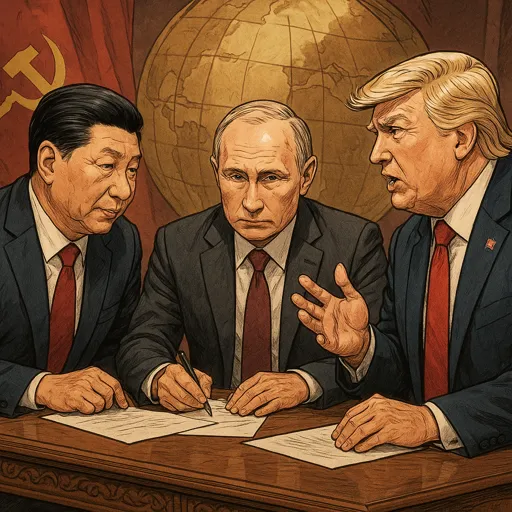
Xi–Putin–Trump Trilateral Summit2026-11-19 • 86 articles in total
In brief
Xi Jinping, Vladimir Putin, and Donald Trump met in Shenzhen to discuss nuclear arms, Ukraine, Iran, AI, and trade amidst ongoing security tensions.
The summit focused on symbolic gestures and testing alignment, with low expectations for immediate major agreements or broad consultations.
European observers expressed concern about potential exclusive deals reshaping global power, while Russia and the US pursued strategic gains and managed public expectations.
A historic trilateral meeting in Shenzhen brought Xi Jinping, Vladimir Putin and Donald Trump together, mixing intense policy stakes with highly choreographed optics. Leaders traded gestures, bilateral pre-meetings and guarded statements while public expectations for immediate breakthroughs remained low. The agenda covered nuclear arms, the Ukraine and Iran wars, AI and trade, set against fresh security incidents such as strikes on the Crimean bridge and regional attacks. European allies and watchers voiced anxiety about possible great‑power realignments even as Beijing emphasized dialogue and ‘world peace.’
Countries covering this topic
Optics and Diplomatic Signalling
Much of the summit’s impact came from staged moments—greetings, photos, seating choices and gestures—that shaped perceptions of relative status and intent. Visuals such as handshakes, airport hugs and the prominent Shenzhen photo were interpreted as signaling priorities, alliances and negotiating leverage among the three leaders.
Reports emphasized a dense, high‑stakes agenda—nuclear arms control, the wars in Ukraine and Iran, AI, Taiwan and trade—while cautioning that durable agreements were unlikely from a single meeting. Analysts framed the talks as a forum to test convergence and divergence between Washington, Beijing and Moscow rather than a venue for definitive multilateral settlements.
The summit unfolded amid tangible security flashpoints: repeated strikes on the Crimea bridge and attacks attributed to Iran that heightened the meeting’s stakes. Such incidents underscored how on‑the‑ground conflict dynamics could complicate diplomatic efforts and place additional pressure on trilateral negotiations.
European and Allied Concerns (‘New Yalta’ Framing)
Many European and regional observers warned that a private three‑way dialogue risked reshaping influence without broader consultation, reviving historical fears of division and sphere‑building. Commentators stressed nervousness about potential bargains struck behind closed doors and urged Western coordination to defend existing security arrangements.
Coverage highlighted separately cultivated China–Russia ties and Moscow’s hope to extract diplomatic and economic gains from high‑level engagement. Russian messaging—criticizing the West and touting potential benefits—was read as part of a broader effort to leverage the meeting to blunt sanctions and bolster influence.
U.S. accounts focused on Trump’s stated goals and pre‑summit bilateral talks with Putin, with Washington seeking leverage on Iran, arms control and other priorities while managing low expectations for sweeping deals. Trump’s public framing—calling the summit a win before it began—reflected a mix of political showmanship and substantive aims tempered by skepticism about immediate outcomes.
Media across countries tracked confirmations, scheduling, venue choices and the novelty of the first formal trilateral meeting among the three powers on the sidelines of APEC. Reporting highlighted China’s role as host, unusual protocols and the diplomatic choreography required to convene the unprecedented format.
Real‑time reporting and analytical pieces offered minute‑by‑minute updates and assessments of what the summit might yield, combining on‑the‑ground detail with broader strategic reading. These live feeds and explainers framed immediate developments for global audiences and parsed implications as talks progressed.