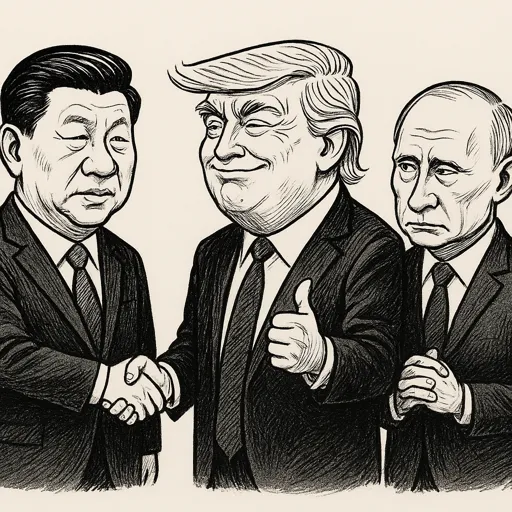
High-level meetings in Shenzhen between Xi Jinping and Donald Trump — and a historic three-way encounter with Vladimir Putin — signalled renewed top-level engagement among major powers, producing a joint declaration and a mix of substantive and symbolic outcomes. Bilateral talks focused on trade, technology and AI governance, with both leaders presenting a polished rapprochement even as core disputes, notably over chips and supply chains, remain unresolved. Media attention to optics — viral videos, gestures and ceremonial courtesies — coloured public perceptions and complicated messaging. Domestic U.S. political pressures and diplomatic moves toward third-party states over Taiwan underscore how internal politics and wider strategic competition continue to shape summit diplomacy.
Leaders presented the Shenzhen meetings as positive and constructive, centring on economic ties, trade negotiations and technology governance. Discussions touched on chips and AI, with both sides signalling interest in pragmatic, moderate rules while substantive disagreements and market implications remain unresolved.
Xi’s hosting of a first trilateral summit with Trump and Putin and the subsequent joint declaration emphasised diplomacy and a public commitment to avoid conflict, enhancing Beijing’s role in major‑power engagement. Commentators framed the gatherings as geopolitical signalling about a bipolar great‑power competition and included broader summit diplomacy with regional partners.
Viral videos and conspicuous moments — from a nuclear briefcase to reports of Trump closing his eyes — dominated coverage, prompting White House denials and international mockery. Such media narratives shaped perceptions of leadership credibility and sometimes overshadowed the summit’s substantive agenda.
Trump’s domestic challenges and pre‑summit briefings influenced perceptions of U.S. leverage and negotiating posture, with analyses warning the events may have advantaged China politically. At the same time, Washington’s pressure on third‑party states over Taiwan highlighted how summit diplomacy interacts with wider U.S. strategic efforts and alliance management.