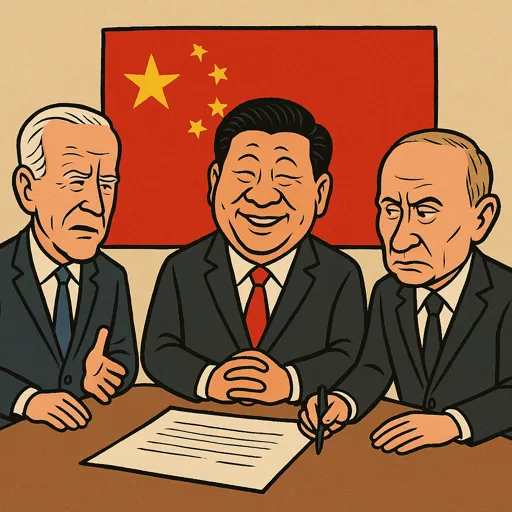
The unprecedented trilateral summit in Shenzhen resulted in a joint "Declaration toward Peace" in which the United States, China, and Russia pledged dialogue on strategic stability, UN reform, and measures to reduce nuclear risks. Leaders also signalled cooperation on energy supplies and other pragmatic issues, while China visibly steered the meeting’s optics and agenda. Many observers portrayed the encounter as symbolically significant but limited in concrete, verifiable commitments. European actors and analysts warned of being sidelined and stressed that follow-up actions will determine whether the declaration has lasting impact.
Multiple outlets focus on the formal outcomes: a shared Declaration toward Peace and statements on strategic stability, UN reform, and restraint on nuclear escalation. Coverage emphasizes the novelty of a three‑way leaders’ format and publishes or summarises the declaration’s text while noting that specifics and implementation remain to be detailed.
Commentary highlights Beijing’s prominent hosting role, from seating and protocol to Xi’s chairing of the talks, presenting China as the convener of high‑level engagement. Supportive external voices and some local analysts frame the summit as a diplomatic success that advances China’s influence and visibility in trilateral diplomacy.
Analysts question whether the summit produced tangible policy shifts, arguing it mainly served as a high‑profile image project that lacked binding commitments and clear implementation paths. Many pieces call for scrutiny of follow‑up measures and warn that symbolism alone will not resolve underlying geopolitical tensions.
European reporting frames parallel meetings in Berlin as a counterpoint and expresses unease that Europe’s security concerns were sidelined by the troika. Some commentators warn of a potential re‑ordering of influence and invoke historical analogies like a feared 'Yalta 2.0' to stress the geopolitical stakes.
Several outlets report leaders’ emphasis on reducing nuclear risks, pledges that a nuclear war must never be fought, and discussion of arms control—while noting leaders’ own reservations about reaching a trilateral disarmament deal. Coverage stresses the diplomatic importance of dialogue on verification, deterrence, and crisis management even as sweeping agreements appear unlikely.
Many reports note calls to increase crude oil and petroleum supplies as part of the summit’s practical agenda, framing energy cooperation as a lever for stabilising markets and exerting geopolitical influence. Observers caution that declarations on output are political signals rather than immediate binding production commitments.
A subset of coverage focuses on proposals for UN reform and the leaders’ joint stance on immunity for state officials, including demands directed at the International Criminal Court. Commentators view these positions as part of a broader push to reshape international legal and institutional norms, raising concerns about implications for accountability and the rules‑based order.