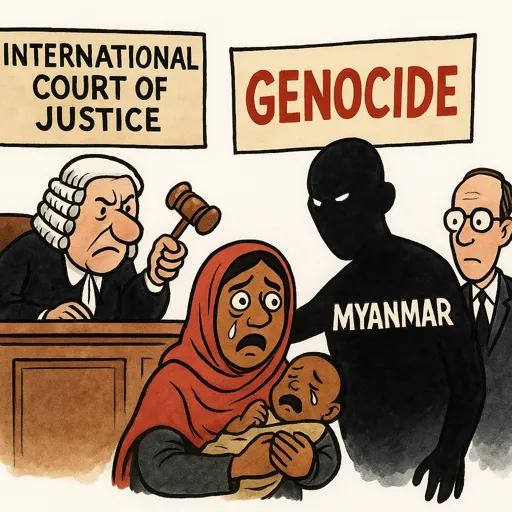
The International Court of Justice has ruled that Myanmar committed genocide against the Rohingya, issuing landmark findings that establish state responsibility and order measures to prevent further harm. The judgment calls for preservation of evidence, investigations, and in some reports reparations and safe return for victims, while underscoring limits in enforcement. Observers and states are weighing legal, diplomatic and humanitarian follow‑up, with commentators noting the ruling’s potential to shape future atrocity cases. The decision also reverberates politically, prompting debates about consistency in international responses to mass atrocities across different conflicts.
Reporting emphasizes the historic and legal significance of the ICJ finding, describing it as a first‑of‑its‑kind ruling that strengthens international accountability for genocide. Coverage explains how the court applied the Genocide Convention and sets a precedent for future international prosecutions and legal standards.
These articles focus on the court’s concrete orders: to prevent further atrocities, preserve evidence, investigate and hold perpetrators to account, and in several accounts to provide compensation or facilitate returns for victims. Reporting highlights the humanitarian stakes for Rohingya survivors and the practical challenges of implementing ICJ instructions inside Myanmar.
Coverage in this group places the ruling in a broader political context, including states’ official responses and debates about enforcement, as well as commentary linking the decision’s implications to other conflicts such as Gaza. Analysts and regional commentators caution that while the judgment is legally significant, geopolitical realities and competing crises will shape follow‑up actions.